SK Enterprises Manufacturer of Industrial Magnetizers & Magnetic Instruments — Maharashtra, India

Magnetizer Fixtures, Coils & Yokes

Multi-pole Magnetizing Fixtures for Rings, Rotors & Encoders

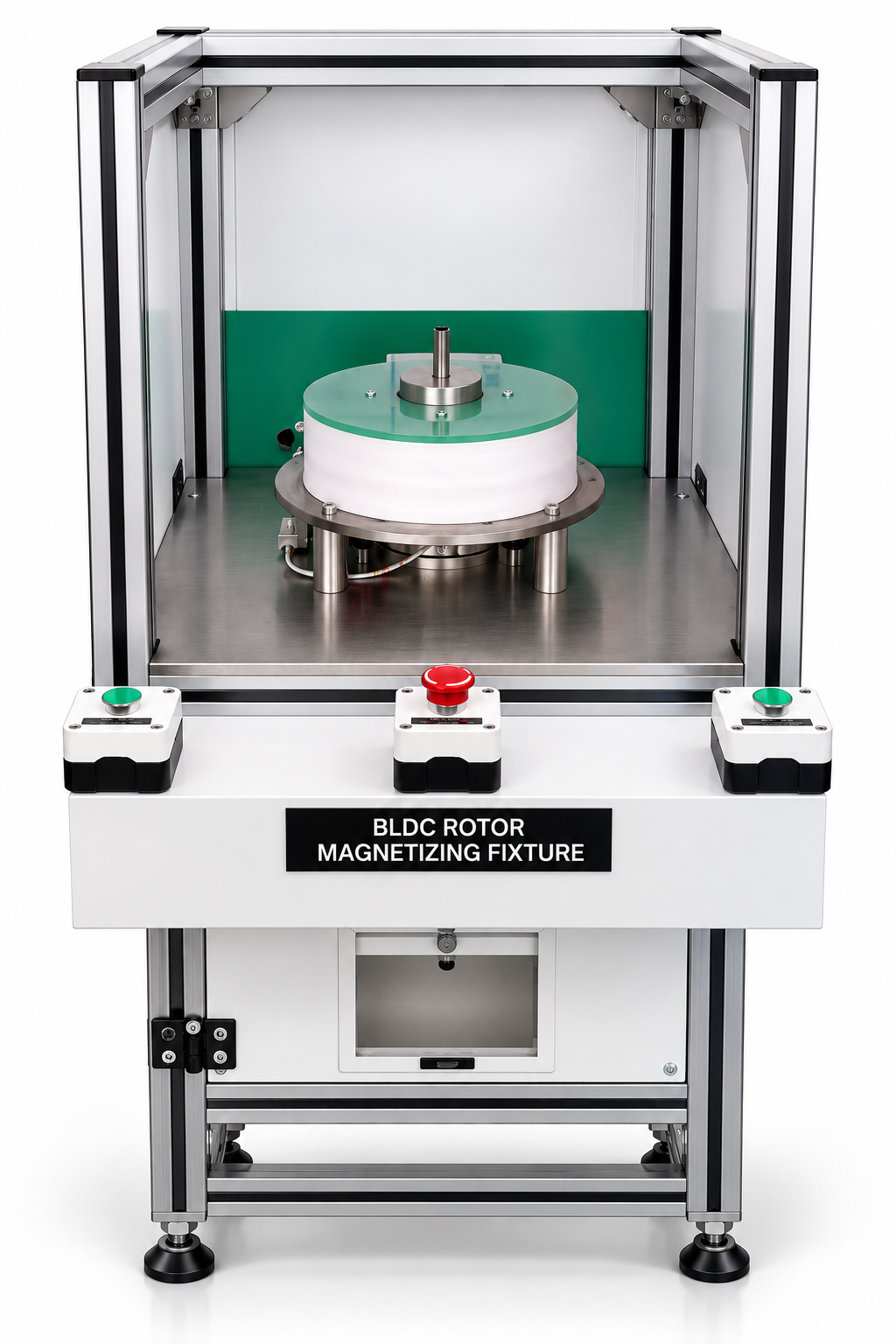
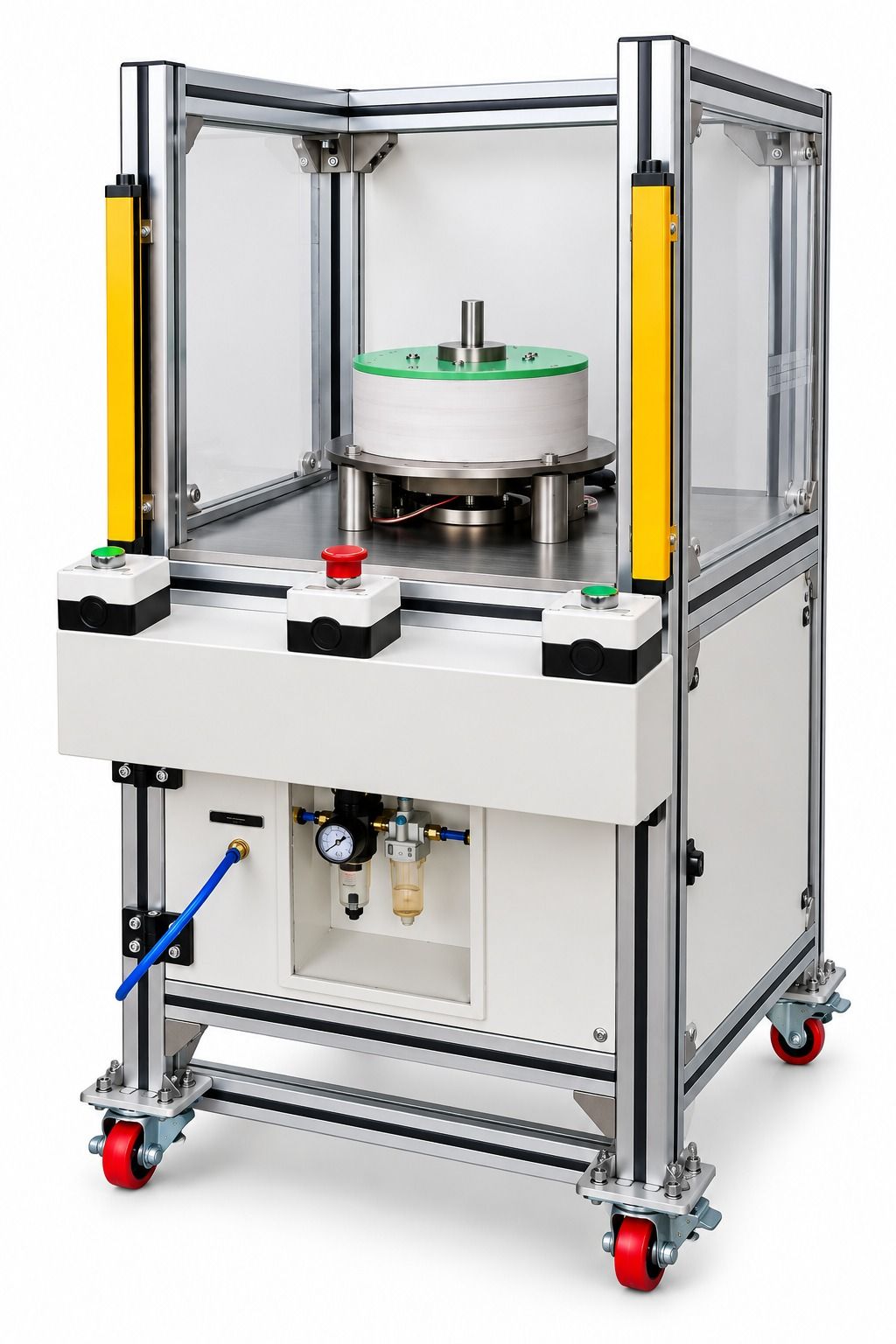
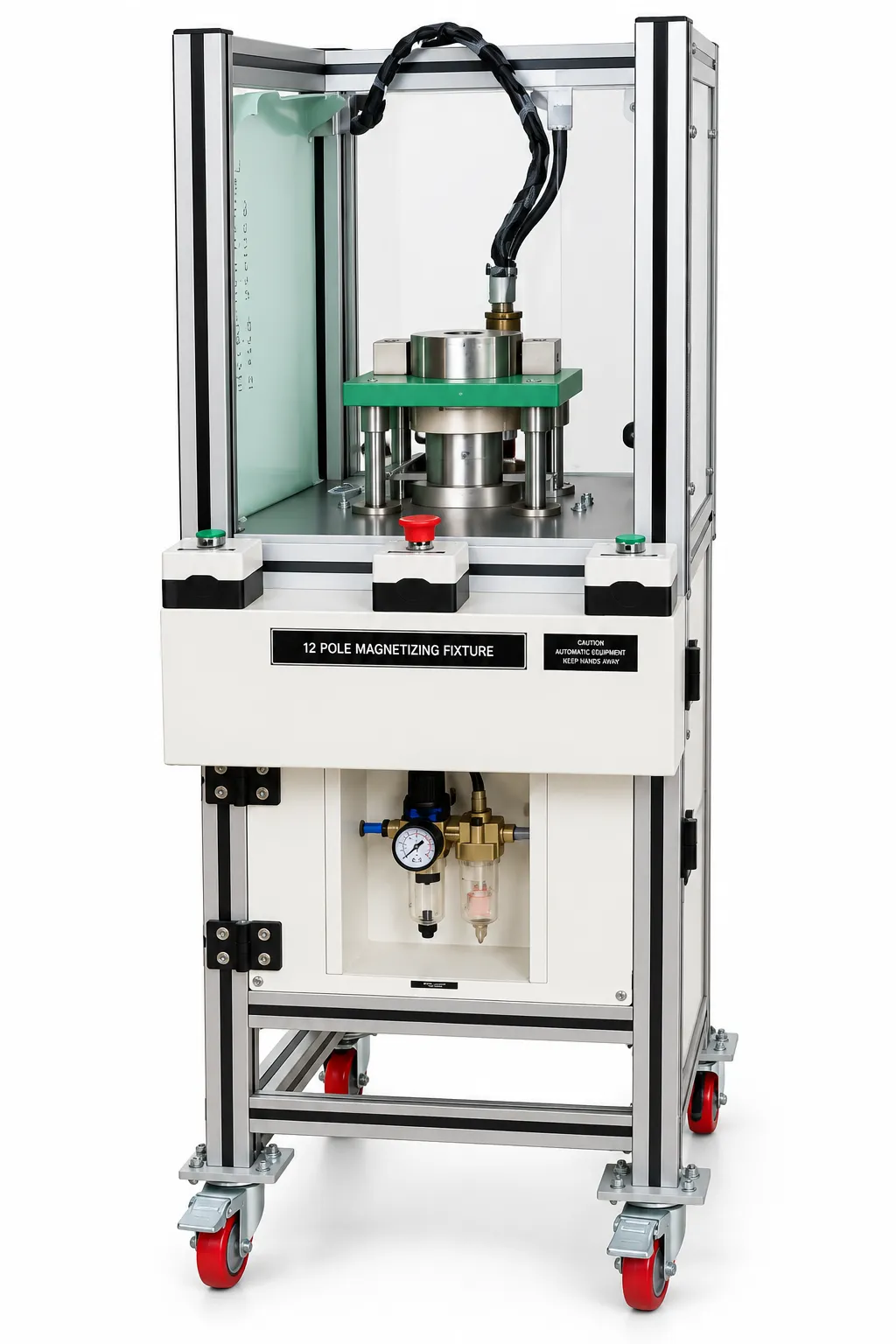
A multi-pole magnetizer fixture — also called a multipole magnetizing fixture — creates a pattern of alternating north and south poles on a magnet with a single pulse from a magnetizer. Conductors set into precisely machined slots fix where each pole forms, so the fixture itself decides the pole count, pole pitch and any skew. SK Enterprises designs and manufactures multi-pole fixtures in Maharashtra for ring magnets, encoder and sensor magnets and motor rotor rings, built to the part drawing and pole specification.

  • Outer-diameter, inner-diameter and face multi-pole patterns
  • Pole count and pole pitch built to your drawing
  • Straight or skewed poles for motor and sensor magnets
  • Matched to the energy and current of your magnetizer
Pole positions
OD, ID or face multi-pole
Construction
Conductors in machined slots at the pole boundaries, with current alternating from slot to slot
Skew
Straight or skewed poles, as specified by the motor or sensor designer
  • Direct from manufacturer
  • Built to your part
  • Application support

Product overview

About Multi-pole Magnetizer Fixtures

How a multi-pole magnetizer fixture works

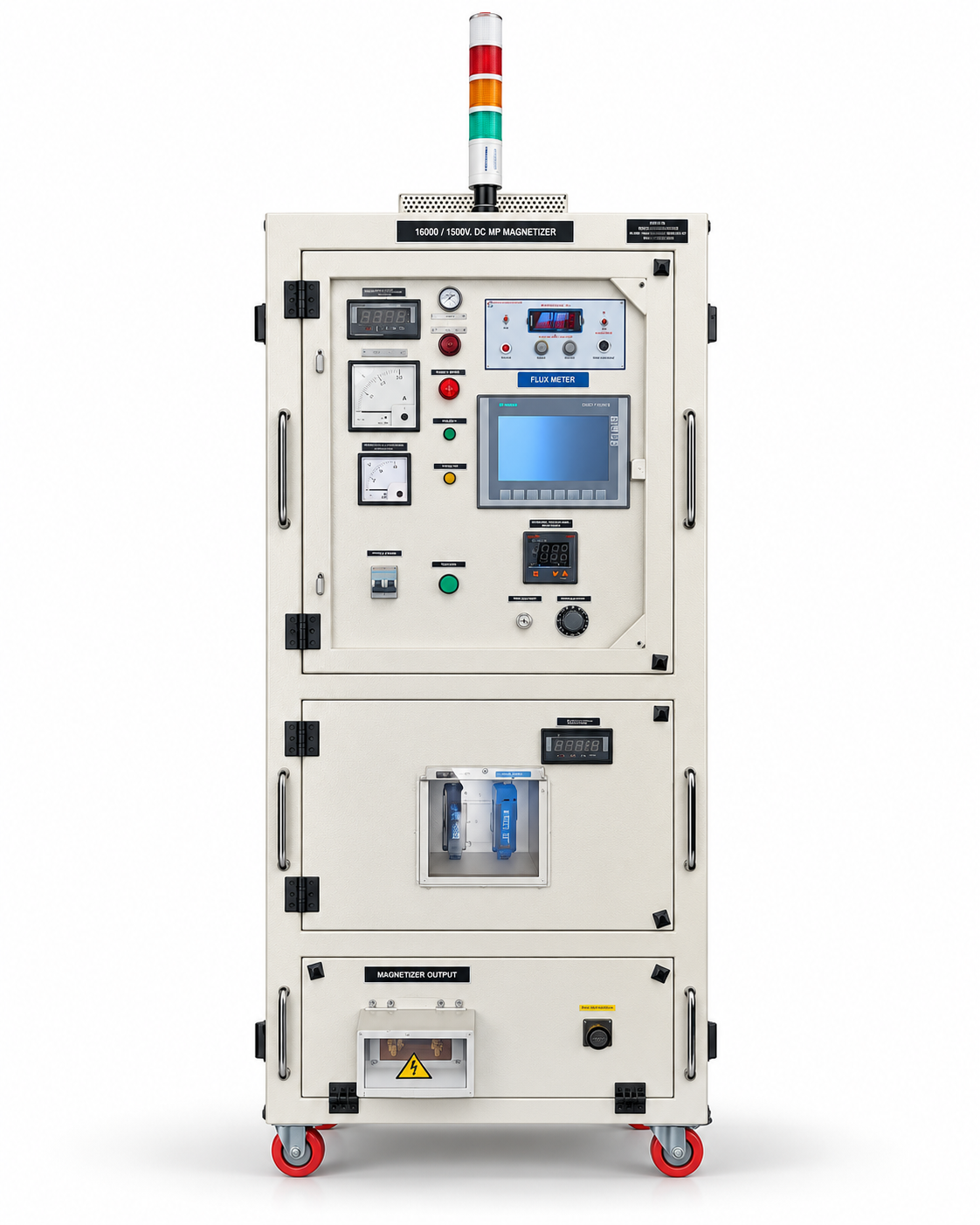
A multi-pole fixture is a precision-machined body with slots around the surface that faces the magnet. A conductor runs through each slot, and the current direction alternates from one slot to the next. When a capacitive discharge impulse magnetizer fires through the fixture, the fields of neighbouring conductors add together in the region between them, forming a north pole at one position and a south pole at the next. The conductors sit at the pole boundaries, so the number of slots sets the number of poles — always an even number.

Because every pole is formed in the same pulse, the pattern is fixed by the fixture’s machining rather than by assembling separate magnets. That makes multi-pole fixtures the standard way to magnetize one-piece ring and encoder magnets. The basics are covered in multi-pole magnetizers explained.

Outer, inner and face multi-pole fixtures

Fixture type Where the poles form Part position Typical parts
Outer diameter (OD) Outer surface of the ring or rotor Part sits in the fixture bore Inner-rotor BLDC and stepper rings, sensor targets read from outside
Inner diameter (ID) Inner surface of the ring Fixture sits inside the part Outer-rotor rings, magnets read from the bore
Face (axial) Flat face of a disc or ring Part rests on the fixture face Encoder discs, axial position sensors

Radial multi-pole or simple radial?

When people ask about ring magnet radial magnetization, they usually mean one of two patterns. In a radial multi-pole ring, the magnetization runs through the ring wall in each pole, alternating outward and inward around the circumference — the pattern OD and ID fixtures produce for motor and sensor rings. In a simple radial ring, the whole outer surface is one pole and the bore is the other, which calls for a different fixture arrangement. Axial and diametrical patterns are different again; our guide to radial, axial and diametrical magnetization compares all of them.

What determines pole quality

Pole count and pitch

More poles on the same diameter mean a narrower pole pitch and less room for each conductor. Narrow poles are also magnetized less deeply: the field from a fine-pitch fixture falls away quickly with distance, so fine patterns are concentrated near the magnet surface. Pole count, part size and magnet thickness have to be considered together at the design stage.

Pole accuracy and part location

Pole position accuracy depends on how precisely the slots are machined, how well the part is centred and angularly located, and how uniform the magnet material is. Where pitch tolerance matters — encoders especially — it can be specified on the drawing and checked by pole scanning, in which a Hall probe measures the field as the part rotates.

Skew

For motor rings, the poles can be skewed along the part length to reduce cogging torque. The skew angle is set by the motor designer and machined into the fixture.

Magnet material and orientation

Isotropic bonded NdFeB and isotropic ferrite can be magnetized with almost any pole pattern. Anisotropic rings are oriented during pressing, either radially or in a polar pattern, and must be magnetized to suit that orientation. A polar-oriented ring works only with the pole count and alignment it was pressed for.

The same principles sit at the heart of a BLDC rotor magnetizer and of multi-pole magnetizers for sensor and motor parts in general.

Multi-pole magnetizer fixture manufacturer in Maharashtra, India

SK Enterprises designs and manufactures multi-pole fixtures within its range of magnetizer fixtures and coils, for motor, sensor and magnet manufacturers across India. Send the part drawing, magnet material, pole count and any pitch or skew tolerance, and we will review feasibility and quote a price.

Request a quotation for a multi-pole magnetizer fixture.

Specifications

Multi-pole Magnetizer Fixtures specifications

Typical technical specifications
Pole arrangement On the outer diameter (OD), inner diameter (ID) or flat face of the part
Pole count Fixed by the fixture design; always an even number, matched to the part specification
Construction Conductors in machined slots at the pole boundaries, with current alternating from slot to slot
Pole accuracy Depends on slot machining, part location and magnet uniformity; can be specified and checked by pole scanning
Skew Straight or skewed poles, as specified by the motor or sensor designer
Magnetization depth Reduces as pole pitch gets smaller — fine-pitch patterns are concentrated near the magnet surface
Suitable magnets Isotropic bonded NdFeB, bonded, rubber and sintered ferrite; anisotropic parts only to suit their orientation
Cooling Natural, forced-air or water cooling, depending on energy per pulse and cycle rate

Typical values for this product type, for reference. Exact values depend on grade, size and design — confirm with our team before ordering.

Models & supply from SK Enterprises
Part sizes On request
Pole counts On request
Pole accuracy On request
Skew On request
Pole scanning On request
Compatible magnetizers On request
Lead time On request

Sizes & variants

Common types and variants

OD multi-pole fixtures

The part sits in the fixture bore and poles form on its outer surface — for inner-rotor rings and sensor targets read from outside.

ID multi-pole fixtures

The fixture fits inside the ring and poles form on its inner surface — for outer-rotor rings and magnets read from the bore.

Face multi-pole fixtures

Poles form on a flat face of a disc or ring, for encoders and axial position sensors.

Skewed-pole fixtures

Poles are angled along the part length to reduce cogging torque in motors.

Applications

Applications of Multi-pole Magnetizer Fixtures

  • BLDC and stepper motor rings

    Bonded NdFeB and ferrite ring magnets magnetized with the motor's pole count.

  • Encoder magnets

    Rings and discs with fine, evenly spaced poles for magnetic encoders.

  • Speed and position sensors

    Multi-pole rings, including rubber-bonded ferrite, read by Hall or magnetoresistive sensors.

  • Small rotor rings

    Ring magnets on rotors for fans, pumps and appliance motors, magnetized after fitting.

Features & benefits

Multi-pole Magnetizer Fixtures features & benefits

Key features

  • Precision slot machining Slot positions set the pole positions, so they are machined to the pole pitch on your drawing.
  • Positive part location Locating features keep each part concentric and in the same angular position, pulse after pulse.
  • Robust conductor support Conductors are clamped and encapsulated so pulse forces cannot move them out of position.
  • Designed with your magnetizer Fixture inductance and current rating are matched to the machine that drives it.

Benefits for your business

  • Accurate pole patterns Pole pitch is set by machining rather than by placing individual magnets.
  • Magnetize after moulding or fitting Rings can be pressed onto shafts or hubs unmagnetized and magnetized as a finished part.
  • Repeatable signals and torque The same pattern on every part gives consistent sensor output and motor behaviour.
  • One magnetizer, many fixtures Different ring and encoder designs need only a new fixture, not a new machine.

Industries served

Industries that use Multi-pole Magnetizer Fixtures

Get the right Multi-pole Magnetizer Fixtures for your application

Send your part drawing, magnet material and output per shift. Our engineers will recommend the right configuration and send a quotation.

FAQs

Multi-pole Magnetizer Fixtures — frequently asked questions

How many poles can a multi-pole fixture produce?

It depends on the part diameter, magnet thickness and material. More poles on the same diameter means a narrower pitch, less room for each conductor and shallower magnetization, so the practical limit is assessed for each part from its drawing.

Can one fixture magnetize parts with different pole counts?

No. The pole count is fixed by the number of conductor slots, so a different pole count needs a different fixture. Parts with the same diameter and pole count but different heights can often share one fixture.

How is pole accuracy checked?

By pole scanning — a Hall probe measures the field around the part as it rotates, giving the position, width and strength of each pole. The results are compared with the tolerance on the part drawing.

What is skewed multi-pole magnetization?

The poles run at a slight angle along the length of the part rather than parallel to its axis. Motor designers use skew to reduce cogging torque; the angle is often chosen in relation to the stator slot pitch and is machined into the fixture.

Can anisotropic ring magnets be multi-pole magnetized?

Yes, but only to suit their orientation. Anisotropic rings are oriented radially or in a polar pattern during pressing, and a polar-oriented ring must be magnetized with the pole count and alignment it was made for. Isotropic bonded NdFeB and isotropic ferrite rings can take almost any pattern.

What is the difference between radial and axial magnetization?

In axial magnetization the poles sit on the flat faces of a disc or ring, with the field running through its thickness — a simple solenoid coil does this. In radial magnetization the field runs outward from the centre, so one pole is on the outer diameter and the other on the inner diameter. Multi-pole parts take this further, with several alternating poles around the outer or inner diameter, which needs a fixture shaped around the part.

What affects the price of a multi-pole magnetizer fixture?

Part size, pole count, required pole accuracy, skew, cooling and the cycle rate it must sustain. Send the part drawing and pole specification and we will review feasibility and quote.

Related products

All products

Knowledge centre

Guides about Multi-pole Magnetizer Fixtures

Get a quote

Request details for Multi-pole Magnetizer Fixtures

Fill in what you know — our team will follow up with a recommended configuration, price and delivery time.

We’ll call or WhatsApp you on this number.
PDF, Word, Excel or image — max 5 MB.

Prefer to talk?

Call or WhatsApp us with your requirement — we’ll help you choose the right magnetizer and fixture.

WhatsApp Us