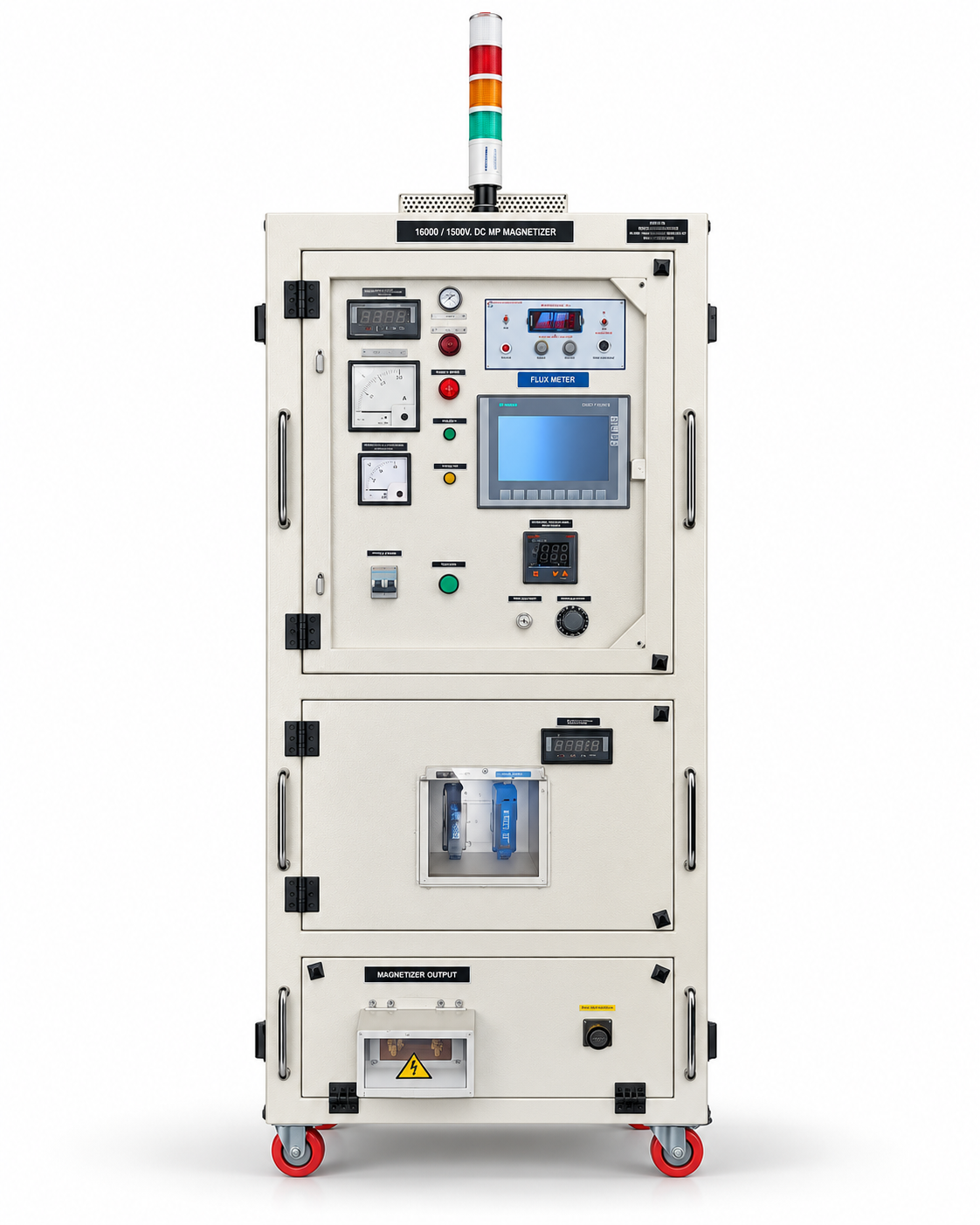
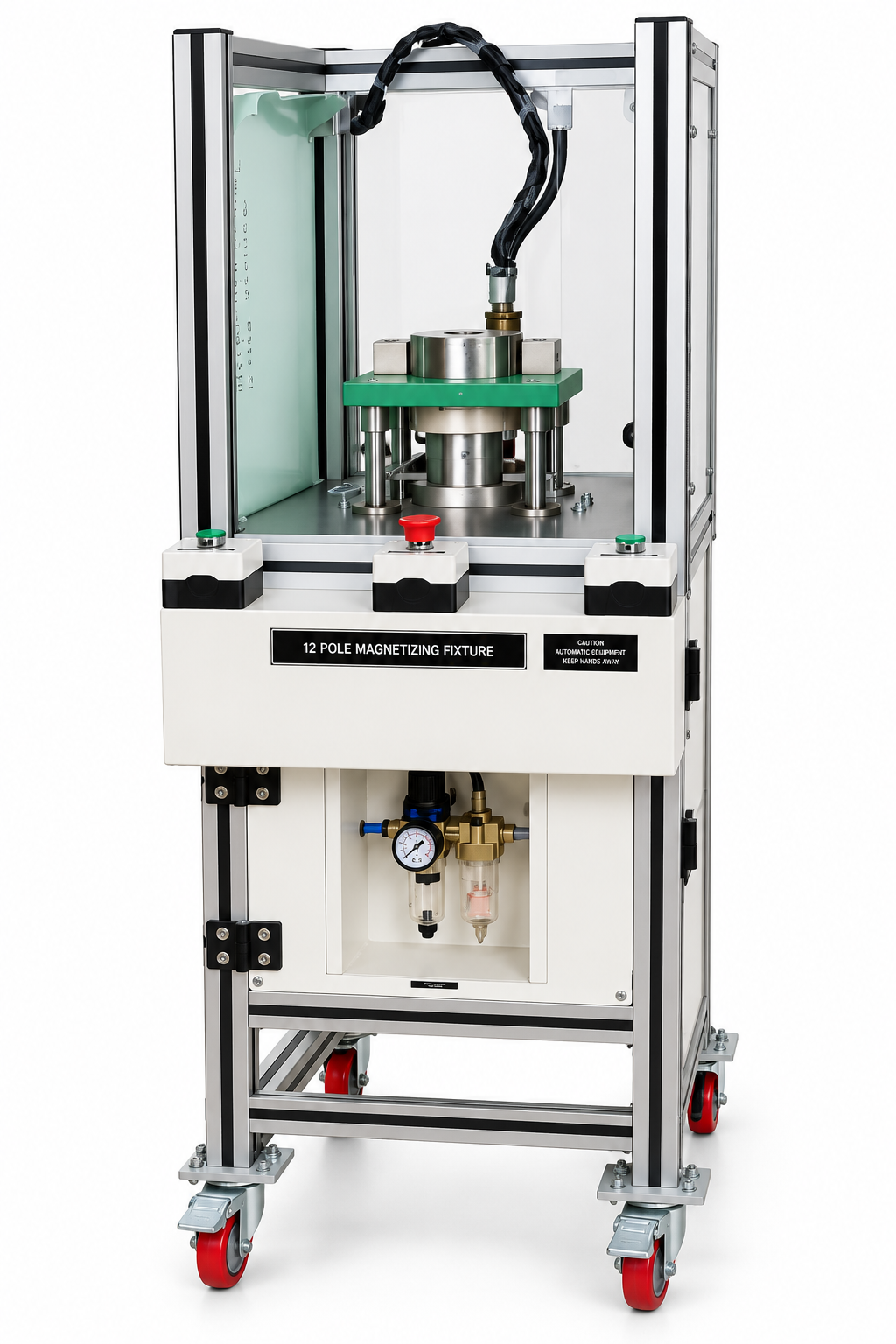
An industrial magnetizer is a safe machine when it is well designed, correctly installed and looked after. It is also a machine that combines high voltage, stored energy, very large currents and strong magnetic forces, so good habits matter. This checklist brings together the points the SK Enterprises team recommends for operators and maintenance staff working with industrial magnetizers. It supplements your machine’s manual rather than replacing it.
Key takeaways
- Treat the capacitor bank as live until it has been isolated, discharged and proven safe with a meter.
- Never bypass guards or interlocks, even for a quick trial.
- Keep loose steel, tools and swarf away from the fixture and from freshly magnetized parts.
- Heat is the main cause of fixture failure, so respect the rated pulse rate and keep cooling working.
- Log pulse counts and peak-current readings. Trends reveal problems before parts are rejected.
The main hazards
High voltage and stored energy
A capacitor discharge magnetizer charges its capacitor bank to hundreds or thousands of volts. That stored energy can deliver a lethal shock, and it remains in the bank after the mains is switched off unless it is discharged. Capacitors can also recover some voltage after being discharged and disconnected, an effect known as dielectric absorption.
Pulse forces and noise
During the pulse, large forces act on the fixture conductors and on the part. A badly located part, or a fixture with loose conductors, can move. The pulse also makes a sharp report; provide hearing protection where noise levels call for it.
Magnetic attraction
Freshly magnetized parts attract steel tools, fasteners and each other, and can trap fingers. Loose steel near the fixture can be pulled in violently during the pulse.
Heat
Fixtures and coils become hot in production. Surfaces can cause burns, and sustained overheating damages insulation.
Medical implants and sensitive items
Strong pulsed fields and magnetized parts can affect pacemakers and other active implants. They can also damage magnetic cards, watches and some instruments. Post clear warning signs at the machine.
Safe operating habits
- Only trained, authorised operators run the machine.
- Guards closed and interlocks working before every shot. Never bypass them.
- Part fully seated in its locating features. No tools, spare parts or swarf on or near the fixture.
- Use the voltage set on the process sheet, and never exceed the fixture’s rating.
- Hands clear when firing, using two-hand control or a guarded foot switch as fitted.
- Watch the peak-current reading. Stop and report anything unusual.
- Know where the emergency stop is, and test it as part of routine checks.
Before opening the cabinet or working on the fixture
- Stop the machine, switch off and isolate the mains supply. Apply your site’s lock-out and tag-out procedure.
- Allow the automatic discharge circuit to complete, for at least the waiting time stated in the manual.
- Verify zero voltage across the capacitor bank with a meter rated for the voltage involved.
- Fit the shorting or earthing link if the manufacturer specifies one, and leave it in place while you work.
- Allow only qualified personnel to work inside the electrical cabinet.
Routine maintenance checklist
The schedule below is a starting point. Adjust the intervals to your machine manual and to how hard the machine works.
| Interval | Checks |
|---|---|
| Every shift | Visual check of cables, connectors and fixture. Remove magnetic debris from the fixture. Test interlocks and emergency stop. Confirm cooling fans or water flow. Note the peak current on the first parts. |
| Weekly | Inspect fixture insulation and potting for cracks or discolouration. Check terminal connections for tightness and signs of heating. Clean air filters and fans. Check guard switches mechanically. |
| Monthly | Confirm the automatic discharge works as specified (qualified person). Review pulse-count and peak-current logs for trends. Check earth bonding. |
| Annually, or as the manual specifies | Full inspection by a qualified technician, including capacitor condition, fixture insulation resistance, and calibration of gauss meters, flux meters and current monitoring. |
Looking after coils and fixtures
Magnetizer coils and fixtures take the brunt of every pulse, so they need the most attention.
- Respect the duty cycle. Run within the rated pulse rate and allow cooling time. Fine-pitch tooling such as a multi-pole magnetizer fixture can be especially sensitive to heat.
- Keep it clean. Magnetic particles collect in the bore and on pole faces. With the machine isolated, remove them with adhesive tape or a non-magnetic brush.
- Watch for warning signs. A change in peak current at the same voltage, in either direction, inconsistent magnetization, a different pulse sound, a smell of hot insulation, cracked or discoloured potting, or any visible movement of conductors.
- Plan for wear. For critical lines, plan fixture rebuilds in advance or keep a spare fixture so production does not stop.
Capacitors, cables and connections
Capacitors age with time, temperature and use. Look for bulging, leakage or loose terminals during inspections. If a machine has been idle for a long period, follow the manufacturer’s procedure before running it at full voltage again. Cables between machine and fixture flex and carry very high pulse currents, so check for abrasion, damaged insulation and loose or discoloured lugs.
Keep records
A simple log for each fixture, recording pulse count, peak-current trend, maintenance actions and any incidents, makes it much easier to predict rebuilds and diagnose faults. When you specify a new machine, include monitoring and logging from the start; our guide on how to choose a magnetizer explains why.
Need help choosing?
If you need advice on servicing, a replacement fixture or a new magnet charging machine with built-in monitoring, the SK Enterprises team can help.