SK Enterprises Manufacturer of Industrial Magnetizers & Magnetic Instruments — Maharashtra, India

Industry

Electric Motor Manufacturing

A permanent magnet motor only performs as designed when every magnet is fully saturated with the correct pole pattern. SK Enterprises builds magnetizers and part-specific fixtures that let motor manufacturers magnetize rotors and housings after assembly, on their own production lines.

Key requirements

Key magnetizer requirements

01

Full saturation of every magnet

Under-magnetized magnets mean lower torque and back-EMF. The magnetizer and fixture must create a field well above the magnet's coercivity; a common rule of thumb is about three times Hcj.

02

Correct pole count and position

The fixture has to reproduce the motor's pole count, pole widths and, where specified, skew, accurately and on every part.

03

A cycle time that matches the line

Capacitor recharge time and fixture cooling decide how many rotors or housings a station can magnetize per hour.

04

Proof that each part was magnetized

Peak-current monitoring and flux or gauss checks catch parts that missed a full pulse before they leave the plant.

Magnetizers in motor production

Most permanent magnet motor manufacturers assemble their magnets unmagnetized and magnetize the finished rotor or housing as one of the last steps. Unmagnetized magnets do not snap together, chip or collect steel swarf, so they are easier to store, handle and feed into automated assembly. The part is then magnetized by a single pulse from a capacitive discharge impulse magnetizer. The pulse typically lasts a few milliseconds.

Motor types and what they need

BLDC and PMSM motors

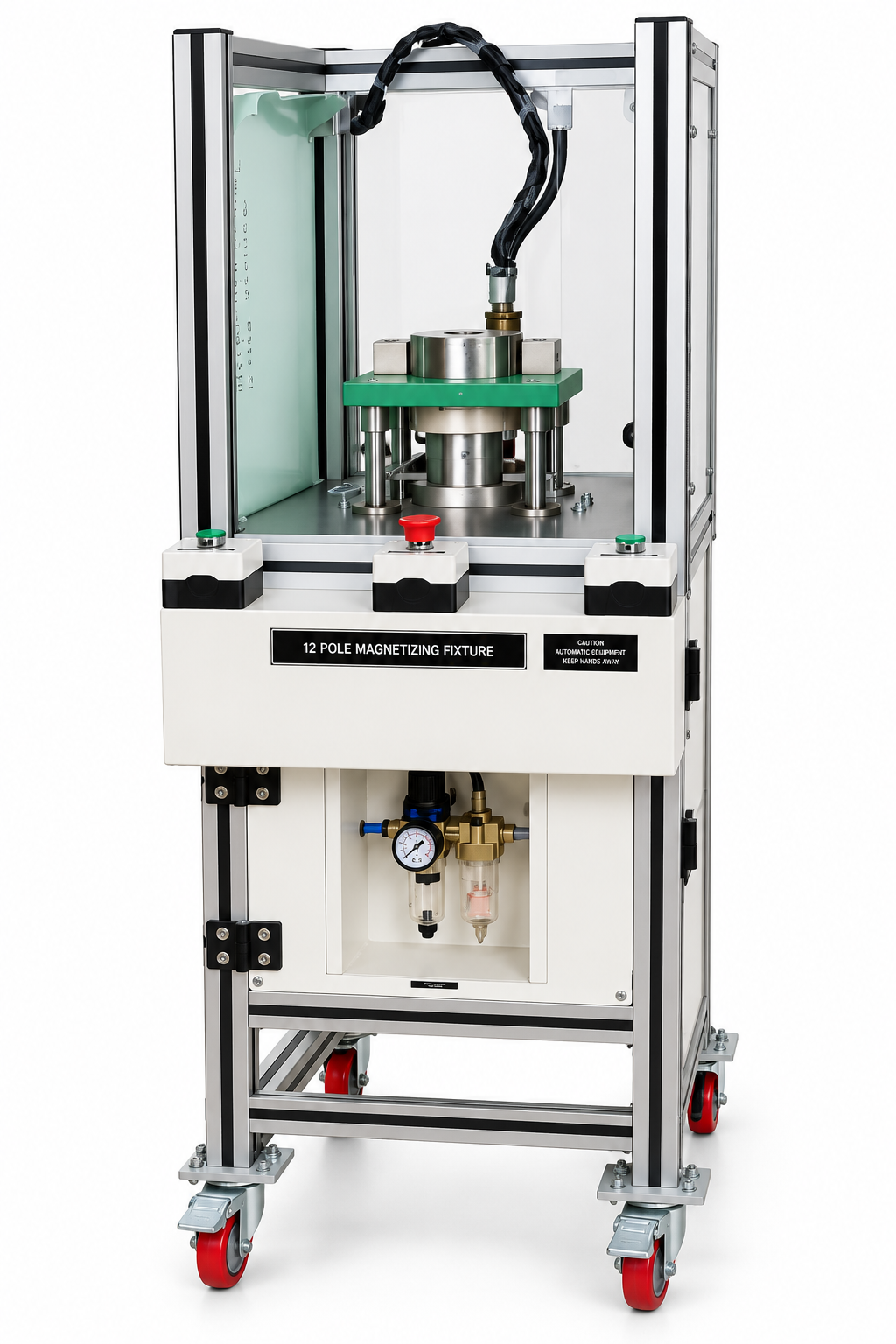
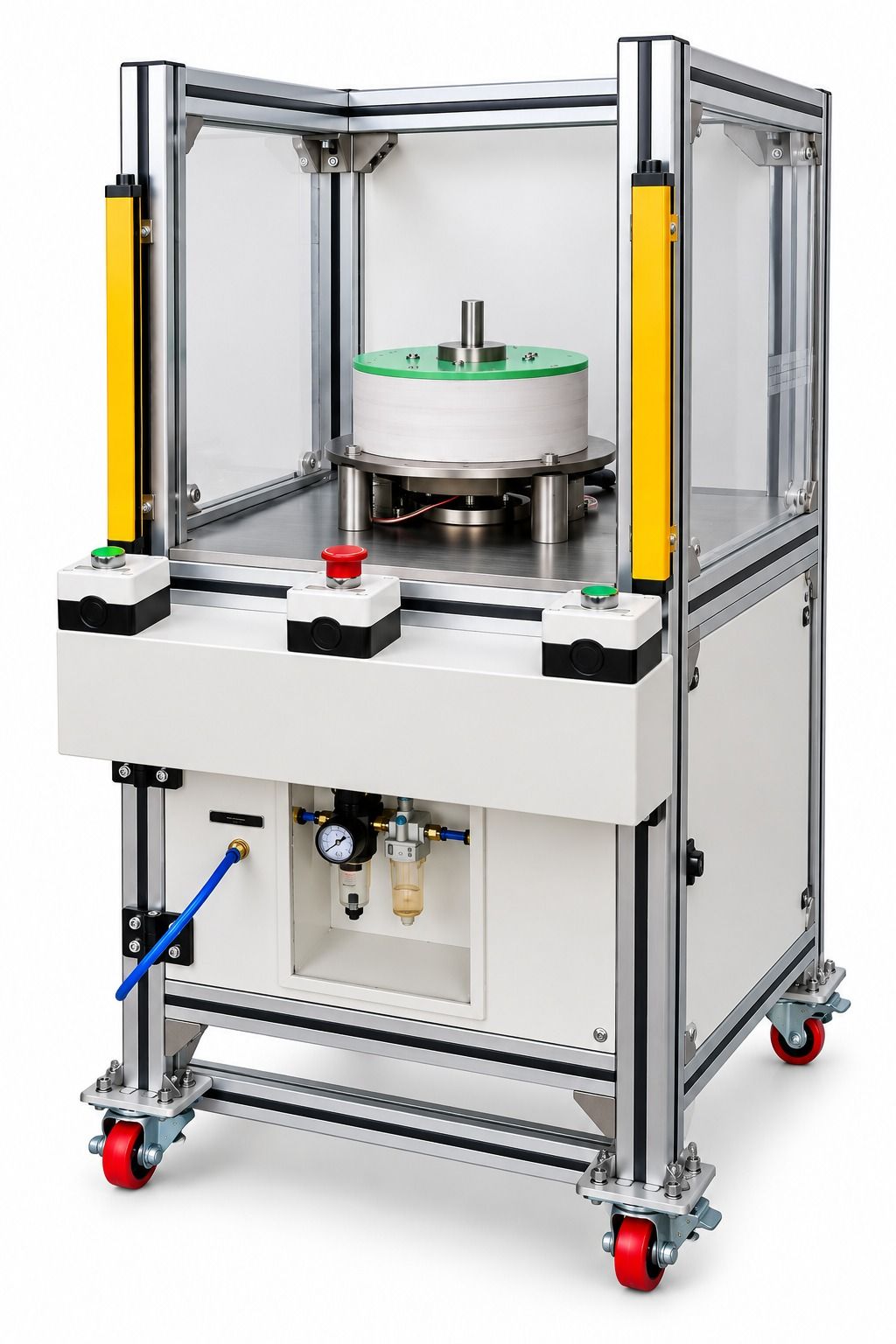
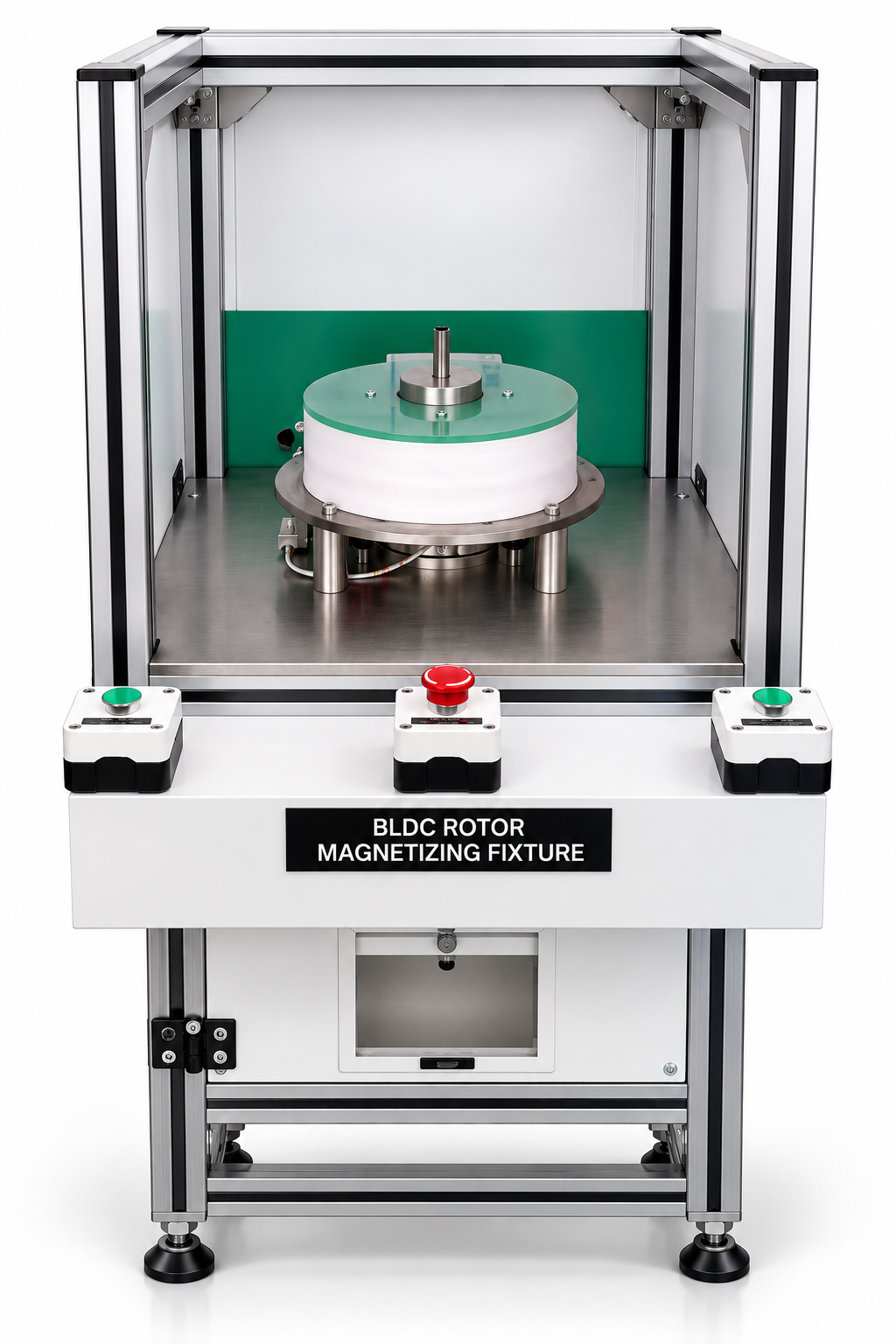
Inner-rotor BLDC and PMSM motors are magnetized in a fixture that surrounds the rotor. Outer-rotor designs use a fixture placed inside the rotor cup. A dedicated rotor magnetizer pairs the machine and fixture for this job. Pole count, pole accuracy and skew are all set by the fixture design.

PMDC motors

PMDC motors usually carry ferrite arc magnets glued or clipped into a steel housing. These are typically magnetized radially from the inside in two or four poles. See motor housing and stator magnetizers for how this works.

Servo and EV / e-bike motors

Servo and traction motors often use high-coercivity NdFeB grades chosen for temperature stability. Sintered NdFeB typically needs a field of roughly 2.5–3.5 T to saturate, compared with about 1–1.5 T for ferrite, and high-coercivity grades need more than standard grades. Larger rotors also need more stored energy, and fixtures strong enough to withstand the forces of each pulse.

Quality control on the line

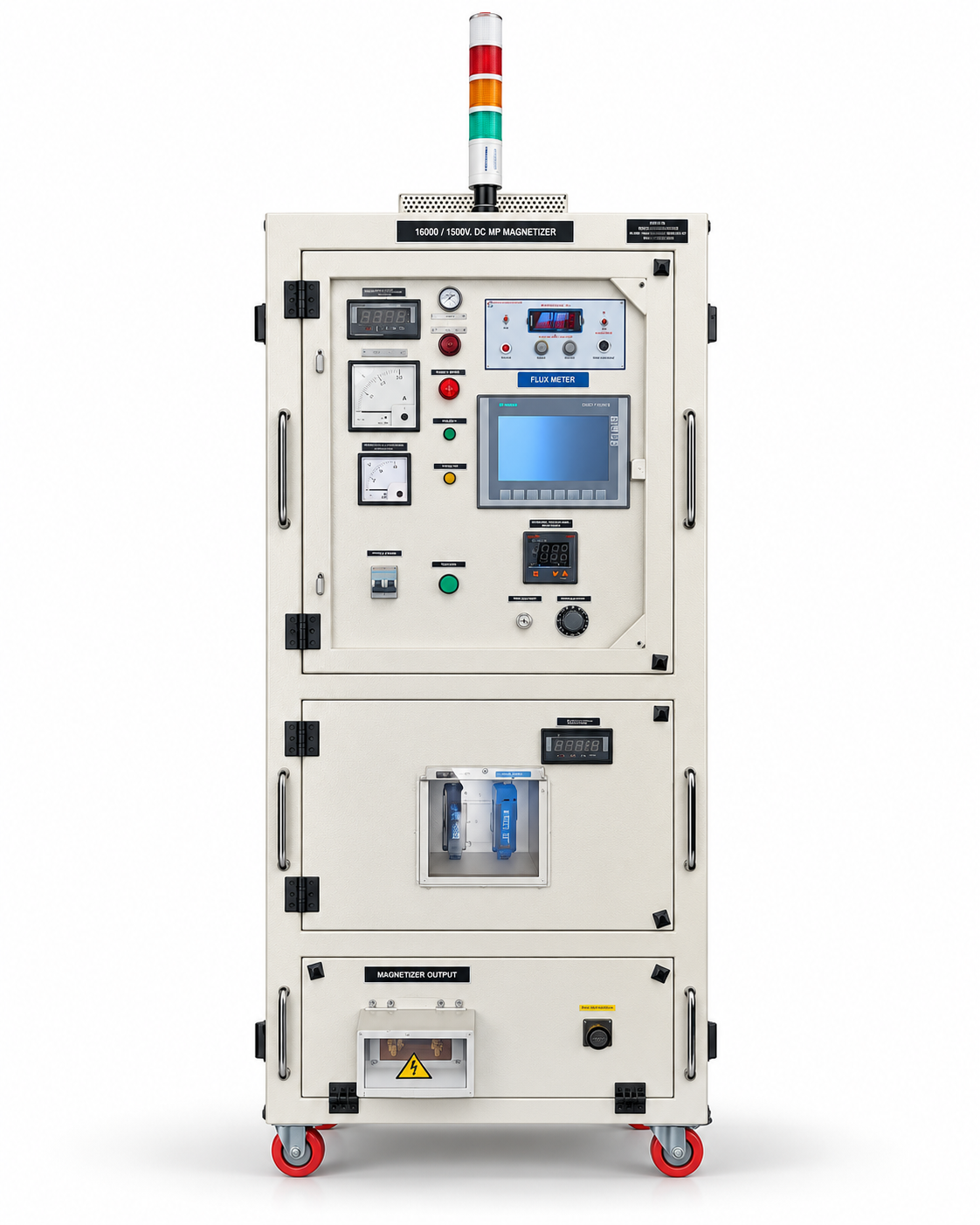
A magnetizer station can do more than magnetize. Peak-current monitoring confirms that each pulse reached its set level, and a flux or gauss check of the finished rotor confirms the result. Together they help keep torque and back-EMF consistent across a batch. Our article on magnetizer field requirements explains how material and grade set the field you need.

Enquire about a motor magnetizer setup

SK Enterprises designs and manufactures magnetizers and fixtures in Maharashtra, India. Send your rotor or housing drawing, magnet grade, pole count and target output, and we will suggest a machine and fixture combination. Request a quotation to get started.

Relevant products

Products for electric motor manufacturing

FAQs

Frequently asked questions

Can rotors be magnetized after they are fully assembled?

For most surface-magnet rotors, yes, and this is the usual approach. Interior-magnet (IPM) rotors are harder because the field has to pass through the laminations, so they need careful fixture design and often more energy. Share your rotor drawing for an assessment.

Do high-temperature NdFeB grades need a stronger magnetizer?

Usually, yes. High-coercivity grades, common in EV and servo motors, need a stronger magnetizer field to saturate than standard grades. This affects both the machine's energy rating and the fixture design.

Can one magnetizer handle rotors and housings for different motors?

Often, by changing fixtures, provided the machine has enough energy and voltage for the most demanding part. Each rotor or housing design normally needs its own fixture.

What information do you need to quote?

A rotor or housing drawing, the magnet material and grade, the pole count and pattern, and your output per shift.

Talk to our engineers about your requirement

Share what you need to magnetize — part, magnet material, pole pattern and output. We will recommend a machine and send a quotation.

WhatsApp Us