SK Enterprises Manufacturer of Industrial Magnetizers & Magnetic Instruments — Maharashtra, India

Industry

Fans, Pumps & Home Appliances

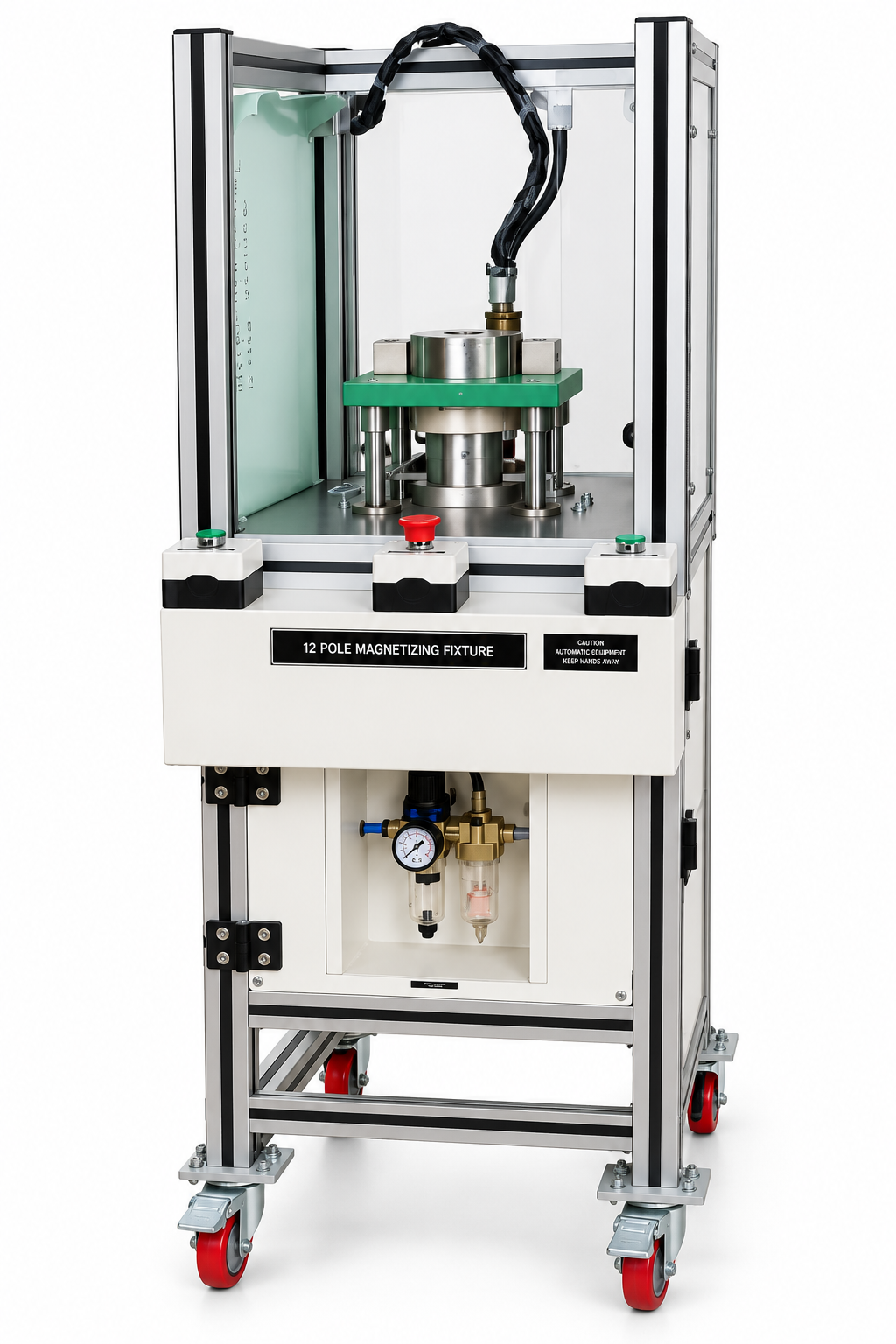
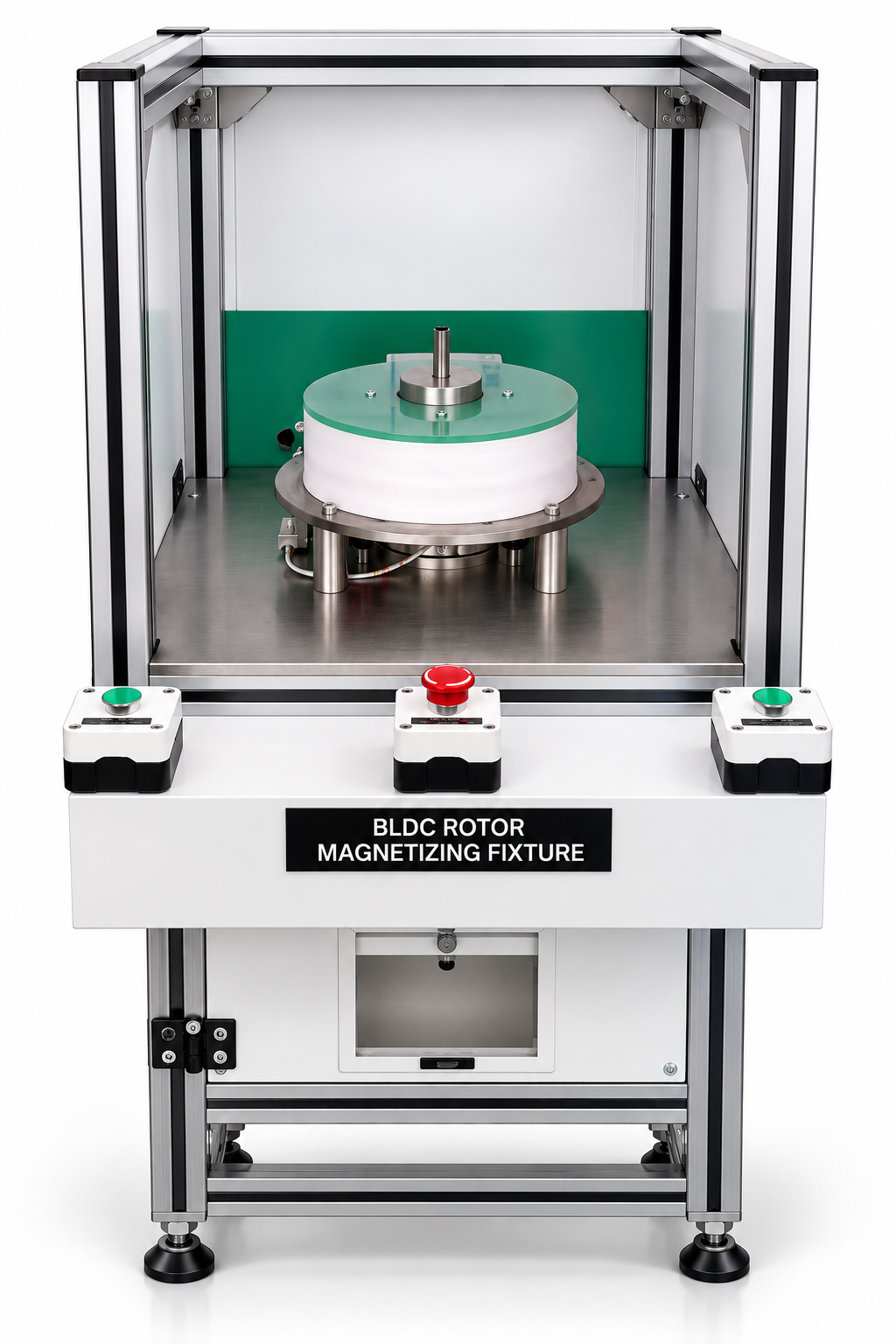
The move to energy-efficient BLDC motors has put permanent magnets into ceiling fans, pumps, washing machines and inverter compressors. SK Enterprises builds rotor magnetizers and multi-pole fixtures that let appliance makers magnetize these rotors in-house, after assembly.

Key requirements

Key magnetizer requirements

01

Fixtures for outer-rotor designs

BLDC ceiling fans and direct-drive washing machine motors typically use an outer rotor, so the fixture sits inside the rotor and magnetizes the magnets from within.

02

Many poles, placed accurately

Appliance motors often have high pole counts, and uneven poles show up as noise, vibration or lost efficiency.

03

Cycle times for high volumes

Appliance lines run at high volumes, so the station's capacitor recharge time and fixture cooling must keep pace.

04

Support for more than one magnet type

The same plant may build rotors with ferrite and with NdFeB magnets, each with its own field requirement.

Permanent magnet motors in appliances

Appliance makers are moving from induction and universal motors to BLDC motors to cut power consumption. Each of these motors has a permanent magnet rotor that must be magnetized with the right number of poles, and most manufacturers prefer to do this after the rotor is assembled, when the magnets can no longer move or chip.

BLDC ceiling fans

Most are outer-rotor motors with ferrite or NdFeB magnets on the inside of the rotor shell. The fixture sits inside the rotor and creates the full pole pattern in one pulse of a few milliseconds. Multi-pole magnetizer fixtures are built around each rotor design. For a step-by-step view of the process, read how BLDC ceiling fan rotor magnets are magnetized.

Pumps

Solar pumps and BLDC domestic pumps use permanent magnet rotors, and many small drain and circulation pumps use compact permanent magnet synchronous motors. Rotor size, magnet material and pole count decide the fixture and the energy needed.

Washing machine and compressor motors

Direct-drive washing machine motors are usually large outer-rotor designs with many poles. Inverter compressor rotors typically have magnets embedded in the laminations, which makes their magnetization after assembly more demanding.

Matching the station to production

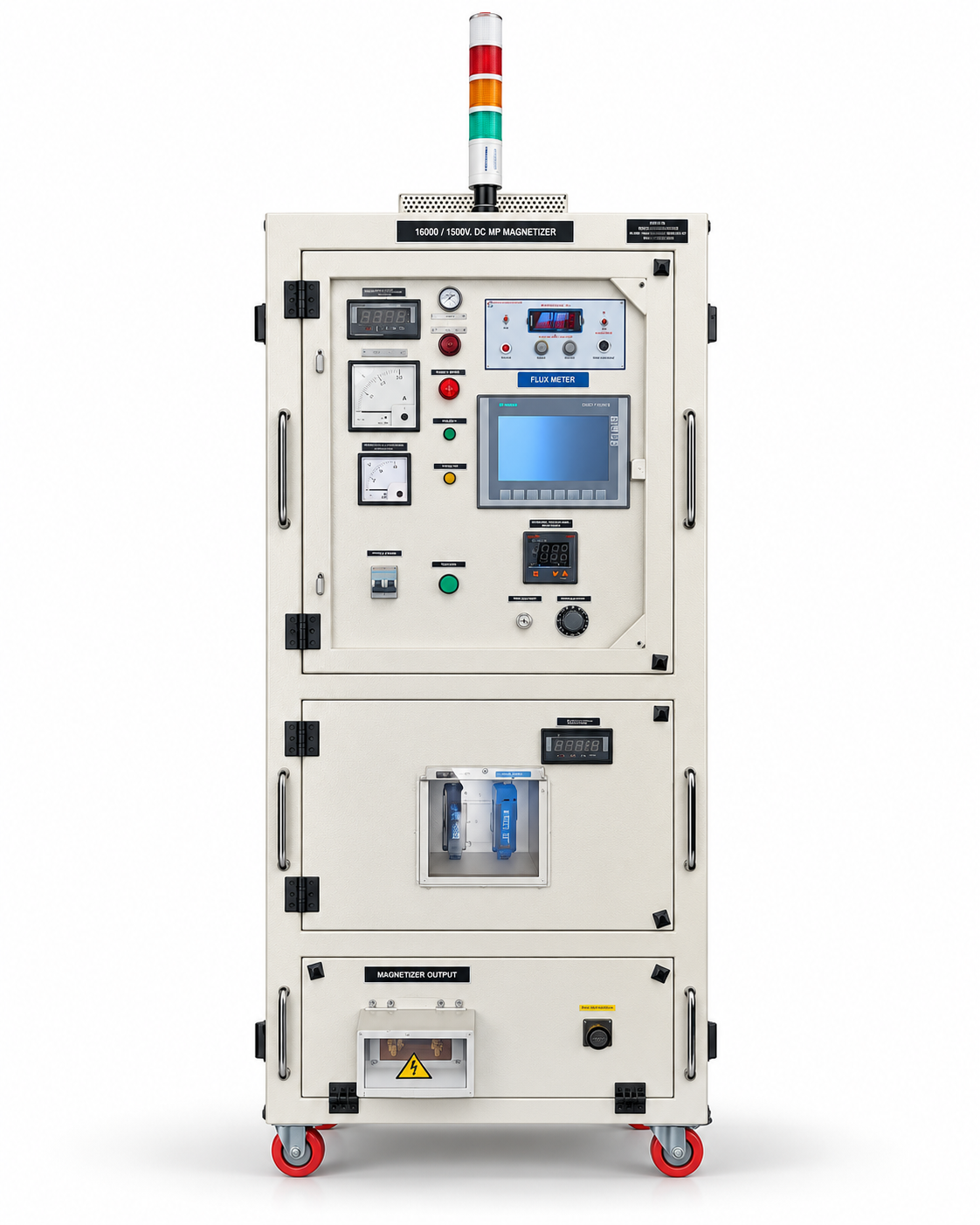
For most appliance rotors, a rotor magnetizer, where the machine and fixture are designed together, is the simplest route. Pole count, pole accuracy and fixture cooling should be settled at the design stage, along with how each part will be checked. Peak-current monitoring on every pulse and a flux or gauss test on sample rotors are common choices.

To understand how fixtures create fine pole patterns, read multi-pole magnetizers explained, or see our page on rotor magnetizers.

Enquire about magnetizers for appliance motors

SK Enterprises designs and manufactures magnetizers and fixtures in Maharashtra, India. Share your rotor drawing, magnet type, pole count and expected output, and we will suggest a suitable setup. Request a quotation for your rotor.

Relevant products

Products for fans, pumps & home appliances

FAQs

Frequently asked questions

How is a BLDC ceiling fan rotor magnetized?

Most BLDC ceiling fans use an outer rotor with magnets lining the inside of the rotor shell. A multi-pole fixture placed inside the rotor magnetizes all the poles together in one pulse.

Can we use the same magnetizer for fan rotors and pump rotors?

Often, yes, with a separate fixture for each rotor design, as long as the magnetizer has enough energy for the most demanding part.

Why magnetize after assembly instead of buying magnetized segments?

Unmagnetized segments are easier to place and glue without jumping out of position or collecting debris, and magnetization of the whole rotor at once gives a consistent pole pattern.

Can inverter compressor rotors be magnetized after assembly?

Compressor rotors usually have magnets buried in the laminations, which makes magnetization after assembly more demanding.

Talk to our engineers about your requirement

Share what you need to magnetize — part, magnet material, pole pattern and output. We will recommend a machine and send a quotation.

WhatsApp Us