SK Enterprises Manufacturer of Industrial Magnetizers & Magnetic Instruments — Maharashtra, India

Industry

Magnet Manufacturers & Traders

Magnet manufacturers and traders often hold stock unmagnetized and charge it only when an order is confirmed, or need to re-charge magnets that have weakened. SK Enterprises builds magnet charging machines and coils that let you magnetize in-house instead of sending parts out.

Key requirements

Key magnetizer requirements

01

Flexibility across sizes and grades

One machine often has to charge small discs, large blocks and rings, in both ferrite and NdFeB, by changing coils.

02

Enough field for the hardest grade

The machine and coil must saturate the highest-coercivity material you sell, not just the common grades.

03

Simple testing after charging

A gauss meter or fluxmeter check confirms that each batch is fully magnetized before it is packed.

04

Safe handling once charged

Charged magnets need non-magnetic trays, spacers and packing so they do not snap together or chip.

Charging magnets in-house

Many ferrite and NdFeB magnets leave the sintering and grinding stages unmagnetized. Whether you make magnets or trade them, charging is often the last step before dispatch, and doing it in-house means you control the timing, the polarity and the result.

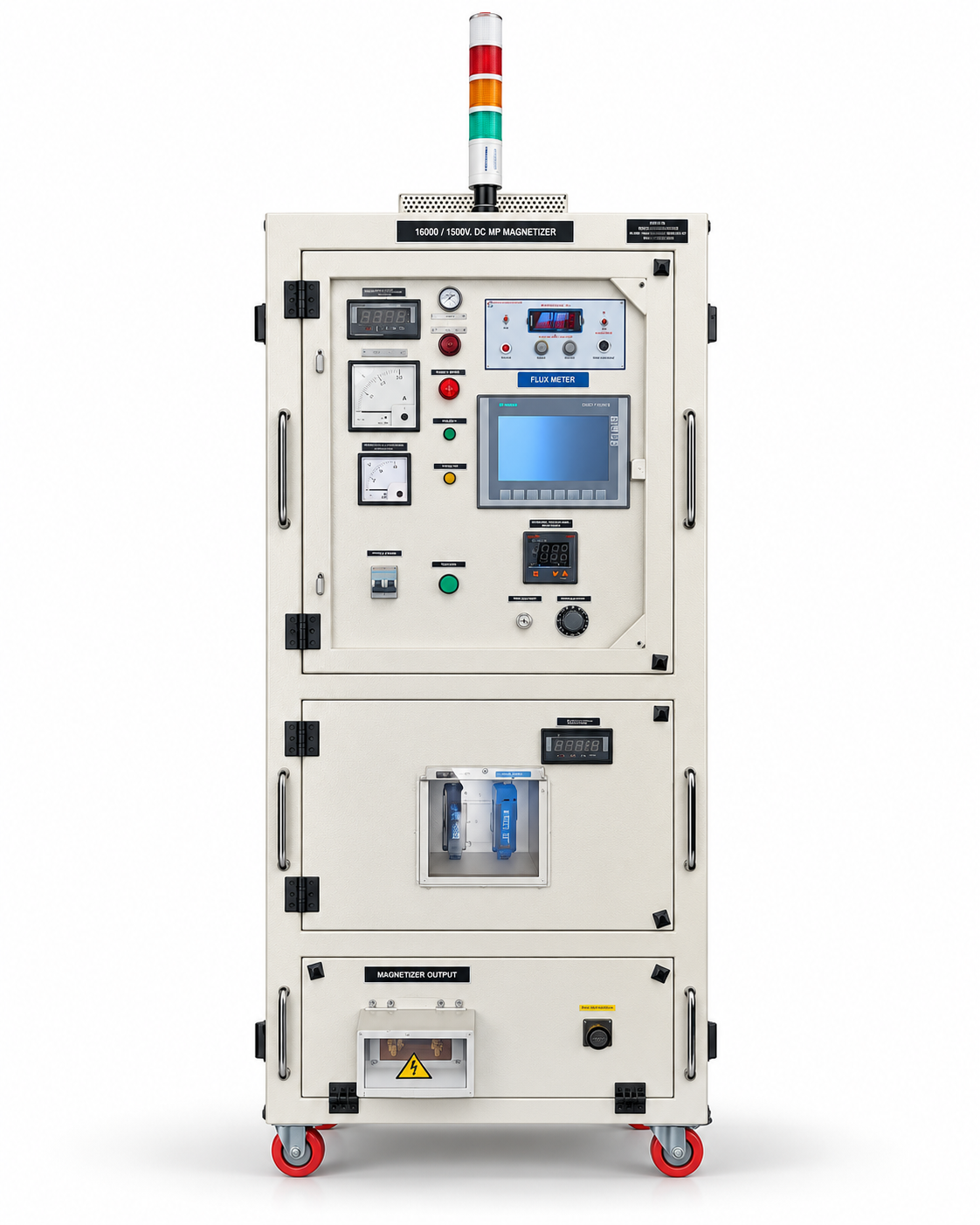
The standard setup for loose magnets is a magnet charging machine paired with a magnetizer coil. The magnet sits in the coil bore and is charged through its thickness by a pulse lasting a few milliseconds. Our explainer on how a capacitor discharge magnetizer works covers the principle.

Common jobs for a charging setup

Charging before dispatch

Stock is held unmagnetized for easy storage and counting, then charged to order. Shipping unmagnetized stock also avoids the special packing that magnetized material can need for air freight.

Testing and sampling

Charging a few pieces from a batch and measuring them with a gauss meter, or a fluxmeter and Helmholtz coil, is a quick way to compare a new lot against a known good reference before a large order is magnetized.

Re-charging stock

Magnets that have been partly demagnetized by heat, by strong opposing fields or by careless storage can usually be brought back to full strength. Our page on magnet recharging explains what can and cannot be recovered.

Getting the direction right

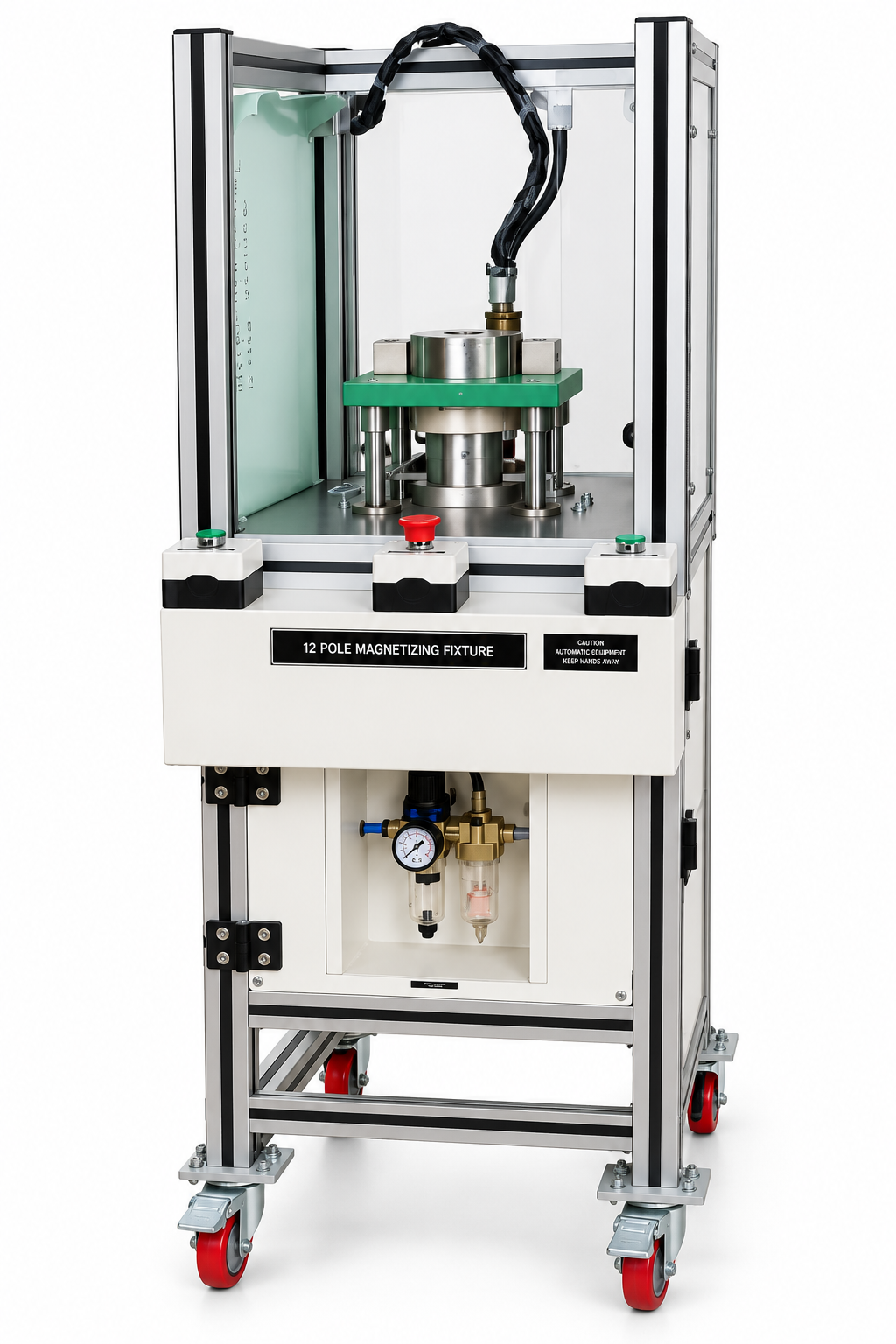
Most sintered magnets are anisotropic: they reach full strength only when magnetized along the direction they were oriented in during pressing. Charging them in any other direction gives a weak result. Isotropic magnets, such as many bonded magnets, can be magnetized in any direction, including multi-pole patterns made with a shaped fixture rather than a coil.

Enquire about a magnet charging setup

SK Enterprises manufactures magnetizers and coils in Maharashtra, India. Tell us the magnet materials you handle, the largest and smallest sizes you charge and your typical batch quantities. Request a quotation for a charging setup.

Relevant products

Products for magnet manufacturers & traders

FAQs

Frequently asked questions

Why would a trader keep magnets unmagnetized?

Unmagnetized magnets are easier to store, count, pack and ship, and they can be charged once an order is confirmed. Some customers also prefer to receive magnets unmagnetized so they can assemble them more easily.

Can one machine charge both ferrite and NdFeB?

Yes, if it has enough energy and voltage for the NdFeB parts and the right coil for each size. Ferrite typically saturates at around 1–1.5 T, while sintered NdFeB needs roughly 2.5–3.5 T.

Can weakened magnets be fully restored?

Magnets that lost strength through an opposing field or moderate overheating can usually be re-charged to full strength. Magnets that are chipped, corroded or structurally damaged by heat may not recover fully.

How many magnets can be charged at once?

It depends on the coil bore, the magnet size and the machine's energy. Small magnets can often be charged several at a time in a non-magnetic holder.

Talk to our engineers about your requirement

Share what you need to magnetize — part, magnet material, pole pattern and output. We will recommend a machine and send a quotation.

WhatsApp Us