SK Enterprises Manufacturer of Industrial Magnetizers & Magnetic Instruments — Maharashtra, India

Industry

Loudspeakers & Audio

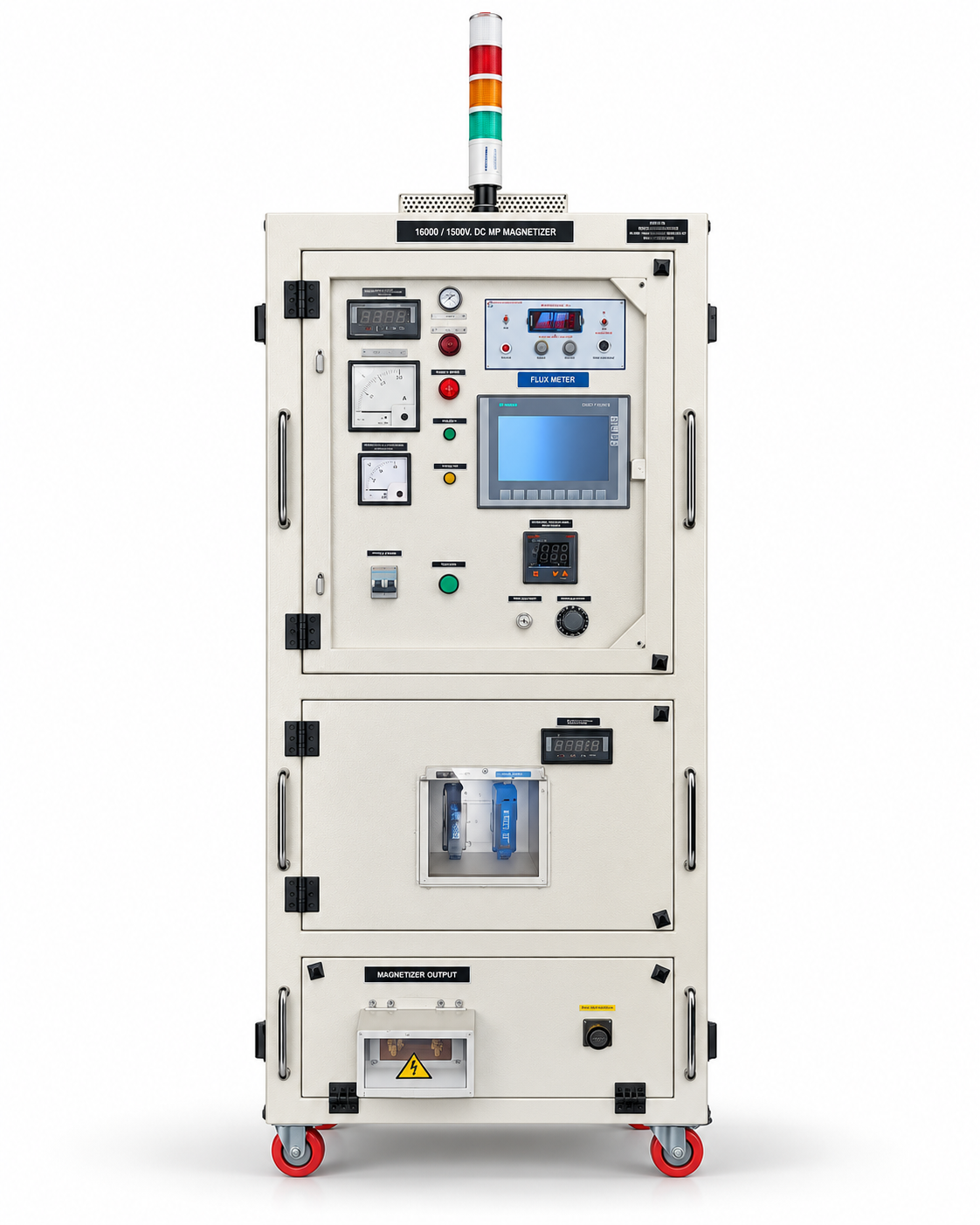
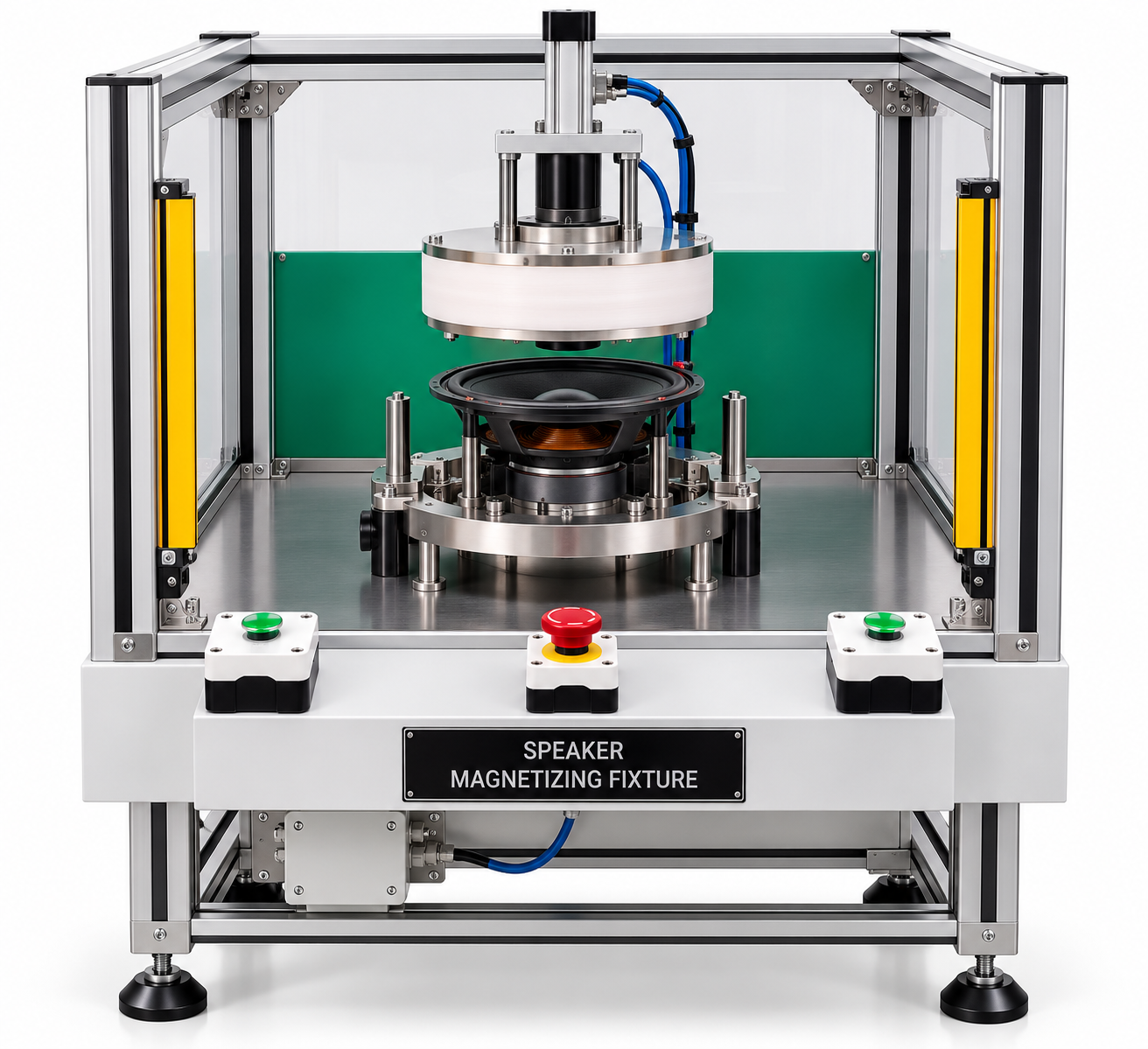
In loudspeaker production, the magnet and steel plates are normally glued together unmagnetized and then magnetized as one assembly. SK Enterprises builds speaker magnetizers that do this in a single pulse, so the speakers in a batch get a consistent field in the voice coil gap.

Key requirements

Key magnetizer requirements

01

A clean voice coil gap

Magnetization after assembly stops steel particles being pulled into the narrow gap, where they can cause rubbing and buzzing.

02

Consistent gap flux

Fully saturating every magnet keeps sensitivity consistent from one speaker to the next.

03

Coils sized to the assembly

Large ferrite rings in woofers and small neodymium magnets in compact drivers need different coil sizes and energy levels.

04

Quick, simple operation

Speaker lines need fast loading and a short cycle so the magnetizer never holds up assembly.

How a speaker magnetizer works

A moving-coil loudspeaker has a magnet held between steel plates and a pole piece, forming a magnetic circuit with a narrow gap for the voice coil. Many manufacturers glue this circuit together with the magnet unmagnetized. The complete assembly, or the finished speaker, is then placed in a coil or fixture and charged by a speaker magnetizer. The pulse lasts only a few milliseconds.

Ferrite and neodymium speakers

Ferrite ring magnets

Most conventional woofers and full-range drivers use a ferrite ring magnet outside the voice coil. Ferrite saturates at a comparatively low field, roughly 1–1.5 T, but large rings need a coil with a big enough bore and a machine with enough stored energy.

Neodymium magnets

Compact and lightweight drivers often use neodymium (NdFeB) magnets, usually inside the voice coil. NdFeB needs a much stronger field, typically around 2.5–3.5 T, so the magnetizer and coil must be specified for it. Our guide to magnetizer field requirements explains why.

Practical points for a speaker line

  • Assembly stage: some lines magnetize the bare magnet assembly before the frame and cone are fitted, while others magnetize the finished speaker. The coil or fixture is designed around whichever stage you choose.
  • Polarity: every magnet must be magnetized in the same direction so the speaker’s acoustic polarity matches its terminal markings.
  • Location: a simple nest that holds the assembly centred in the coil gives repeatable results.
  • Cycle time: fixture cooling and capacitor recharge time set how many speakers can be magnetized per hour.
  • Checks: a gauss reading in the gap, or a sensitivity test on the finished speaker, confirms the result.

The same machine is useful for recharging speakers that come back for rework or repair.

Enquire about a speaker magnetizer

SK Enterprises is a magnetizer manufacturer based in Maharashtra, India. Tell us the speaker sizes, magnet type and output you need, and we will recommend a magnetizer and coil. Contact our team or request a quotation.

Relevant products

Products for loudspeakers & audio

FAQs

Frequently asked questions

Why are speakers magnetized after assembly?

Unmagnetized parts are easier to glue and centre, and they do not attract steel dust into the voice coil gap. Magnetization of the finished magnet assembly in one pulse is cleaner and more consistent.

Can the same machine magnetize ferrite and neodymium speakers?

It can, if the machine has enough energy for the neodymium parts and a suitable coil or fixture is used for each size. Neodymium needs a considerably stronger field than ferrite.

Can old or weakened speakers be re-magnetized?

Often, yes. Speakers that have weakened, such as older alnico units or drivers exposed to heat, can usually be re-magnetized. Magnets that are cracked, corroded or heat-damaged may not recover fully.

Talk to our engineers about your requirement

Share what you need to magnetize — part, magnet material, pole pattern and output. We will recommend a machine and send a quotation.

WhatsApp Us