SK Enterprises Manufacturer of Industrial Magnetizers & Magnetic Instruments — Maharashtra, India

Application

Magnet Recharging with a Magnetizer

Magnets can lose part of their strength in service, during rework or in storage. In many cases a magnetizer can bring them back to full strength, but not always, and knowing the difference saves time and rejected parts.

Why magnets lose strength

Permanent magnets are stable, but some conditions cause a loss that does not recover by itself:

  • Heat: running a magnet above its rated temperature causes losses that remain after it cools. NdFeB grades vary widely in temperature rating.
  • Opposing fields: high current in a motor, for example during a stall or overload, can partly demagnetize the magnets. Ferrite also becomes easier to demagnetize at low temperatures.
  • Disassembly: alnico magnets in particular lose strength when removed from their magnetic circuit, which is why older speakers and magnetos often need recharging after rework.
  • Handling and storage: magnets stored next to opposing magnets, or exposed to strong stray fields, can be partly demagnetized.

In these cases the material itself is unchanged, so the loss can usually be recovered with a magnetizer.

What can be recovered, and what cannot

Recharging with a magnetizer restores magnetization, not material. Magnets that are corroded (a common problem with NdFeB whose coating is damaged), cracked or chipped, or that have been heated far enough to change their structure, may not recover fully however strong the pulse. In those cases, replacing the magnet is the reliable fix.

How magnet recharging is done

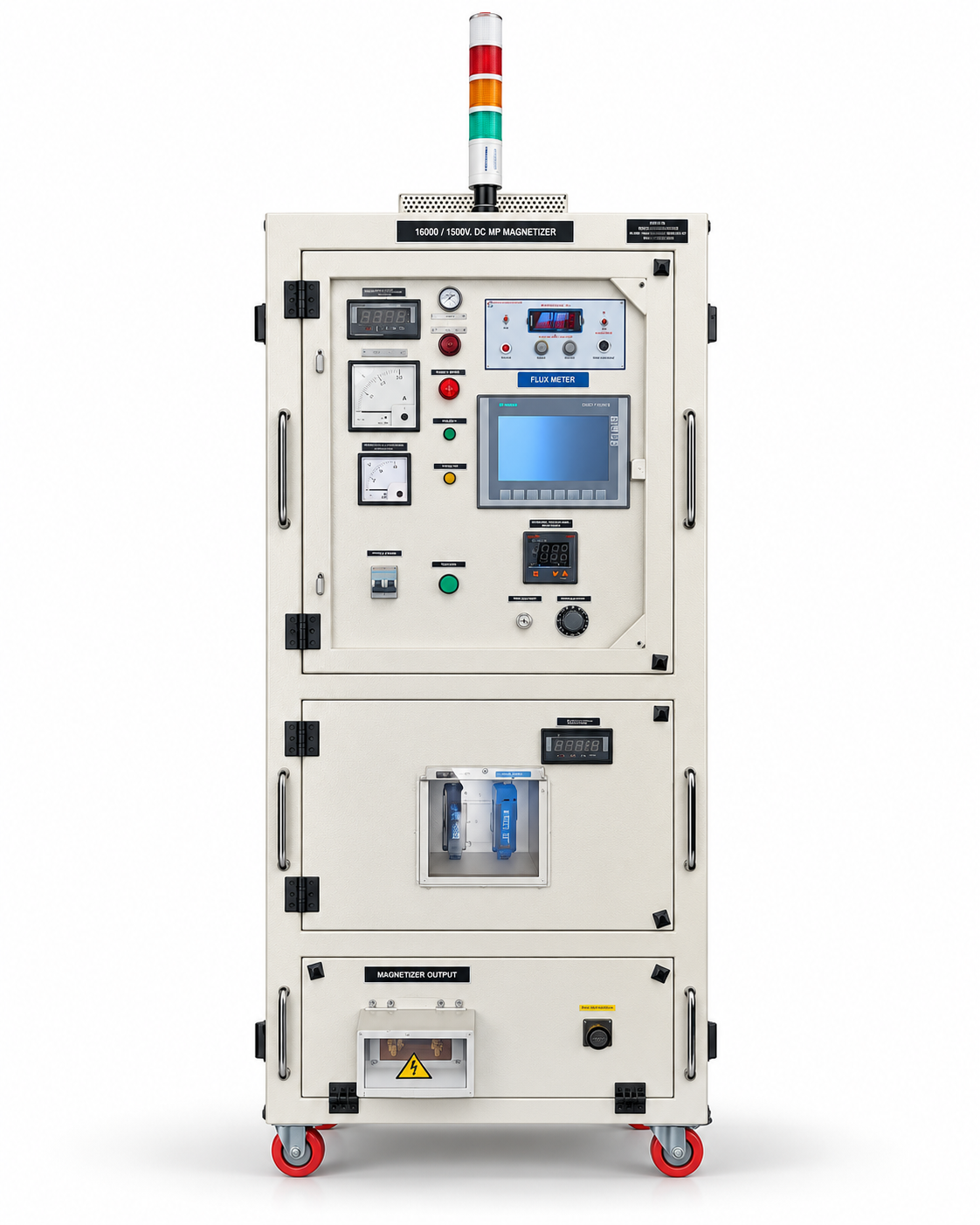
The process is the same as first-time magnetization, using a magnet charging machine with the right coil or fixture:

  • Loose magnets are recharged in a magnetizer coil, in the same direction and polarity as before.
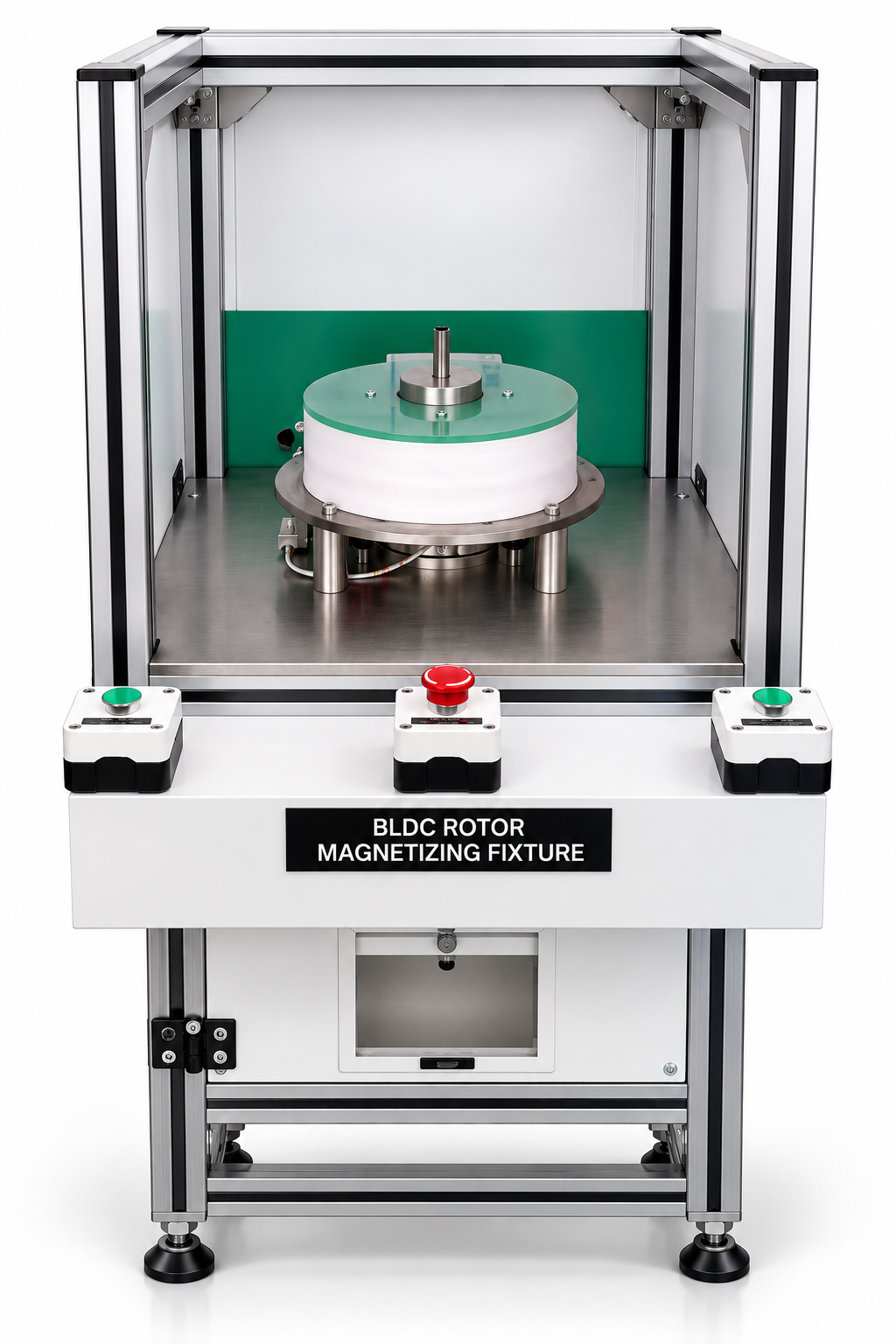
  • Rotors and housings need a fixture that matches the original pole count, with the part aligned so the new poles land exactly where the old ones were.
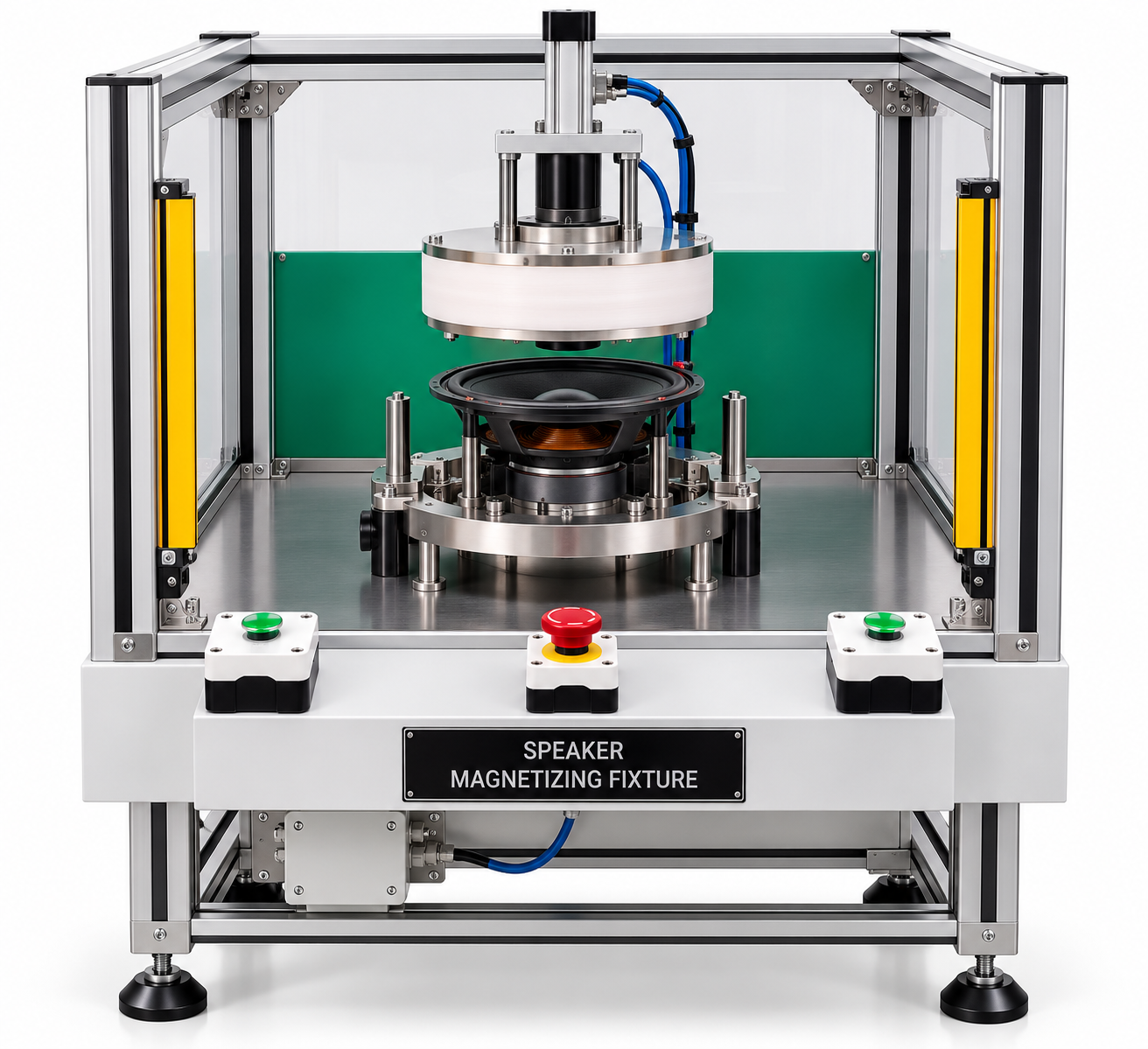
  • Loudspeakers are recharged as a complete assembly, just as in speaker production.

Recharging a weak magnet still needs the full saturation field: roughly 1–1.5 T for ferrite, 2.5–3.5 T for sintered NdFeB and 3.5–5 T for SmCo. Check the result against a known good part with a gauss meter or fluxmeter.

Rework areas are often less controlled than production lines, so make sure operators follow the guidance in our article on magnetizer safety and maintenance.

Enquire about re-magnetizer equipment

SK Enterprises manufactures magnetizers, coils and fixtures in Maharashtra, India. Tell us what you need to recharge, whether loose magnets, rotors, housings or speakers, and the magnet material. Contact our team to discuss it.

Relevant products

Products for magnet recharging with a magnetizer

FAQs

Frequently asked questions

Can neodymium or other permanent magnets be recharged?

Yes. Neodymium (NdFeB), ferrite, samarium cobalt and alnico magnets can all be recharged, provided the material itself is undamaged. Neodymium needs a strong field — roughly 2.5–3.5 T for typical sintered grades — so it takes a capacitor discharge magnetizer with a suitable coil or fixture; rubbing it with another magnet will not restore it. Magnets that are corroded, cracked or have been badly overheated may not recover fully.

Can every weakened magnet be re-magnetized?

No. If the loss was caused by an opposing field or moderate heat, the magnet can usually be restored. If it is cracked, corroded or has been heated enough to change its structure, part of the loss is permanent.

Will a re-magnetized magnet be as strong as new?

If the material is undamaged and the magnetizer reaches saturation, it should return close to its original strength. A gauss or flux measurement against a known good part confirms this.

Do I need the original fixture to re-magnetize a rotor or housing?

You need a fixture that matches the original pole count and pole positions. Re-magnetization with a different pattern can leave the part with mismatched or weakened poles.

Can a magnet be re-magnetized more than once?

Yes. Magnetization does not wear out the material, so a magnet can be recharged repeatedly as long as it is physically sound.

Talk to our engineers about your requirement

Share what you need to magnetize — part, magnet material, pole pattern and output. We will recommend a machine and send a quotation.

WhatsApp Us