SK Enterprises Manufacturer of Industrial Magnetizers & Magnetic Instruments — Maharashtra, India

Application

Motor Housing & Stator Magnetizer

In a permanent magnet DC motor, the magnets sit inside the steel housing and form the stator field. Magnetization after they are fixed in the housing is cleaner and more consistent than fitting magnetized arcs, and it needs a fixture made to the housing's size and pole layout.

Where housing magnetizers are used

Housing (or stator) magnetizers are used wherever a PMDC motor has its magnets fixed inside a steel shell. Typical examples are automotive wiper, blower, window-lift and starter motors, small DC motors in appliances and pumps, and many industrial DC motors. The magnets are usually ferrite arcs held in place with adhesive or spring clips.

How it works

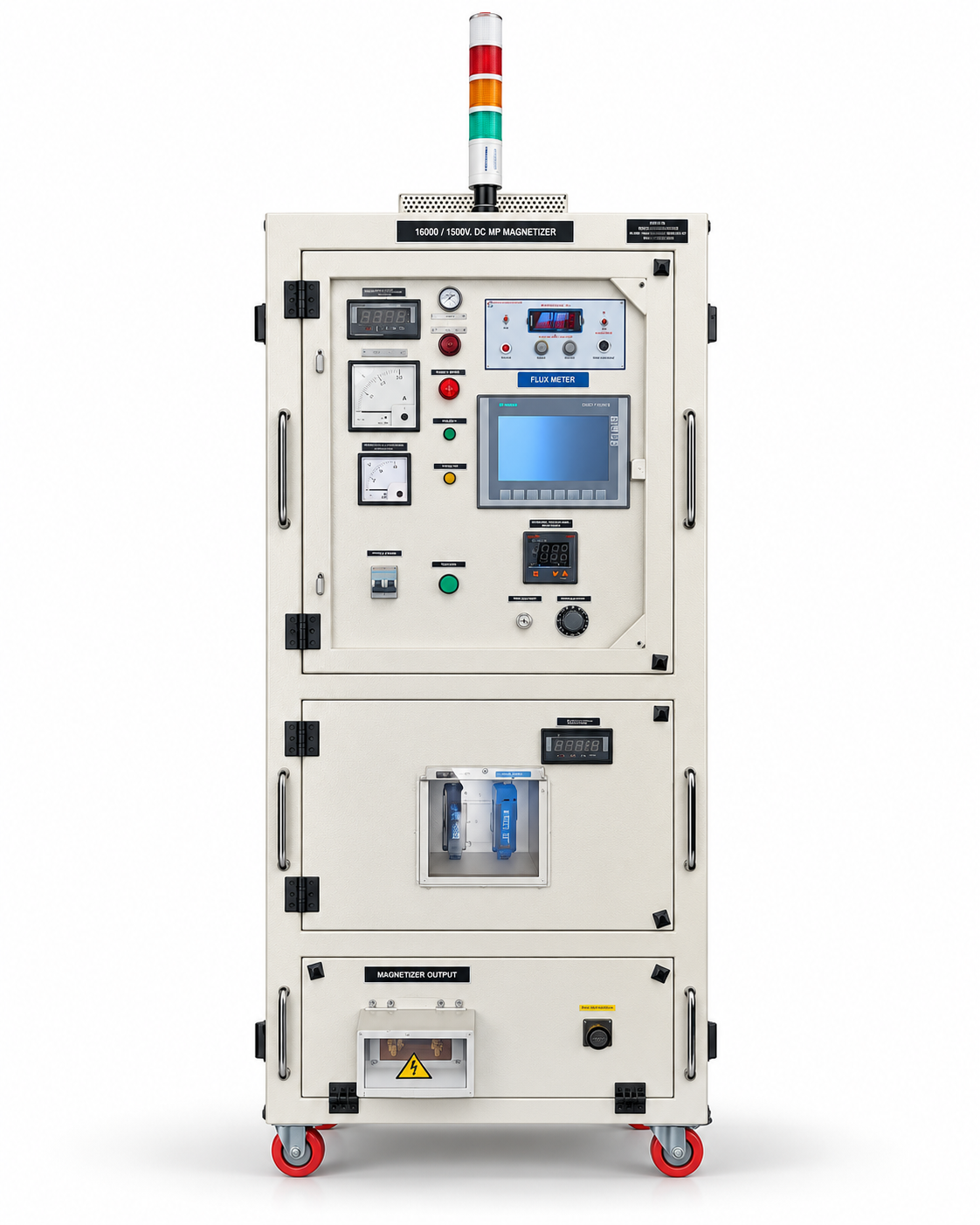
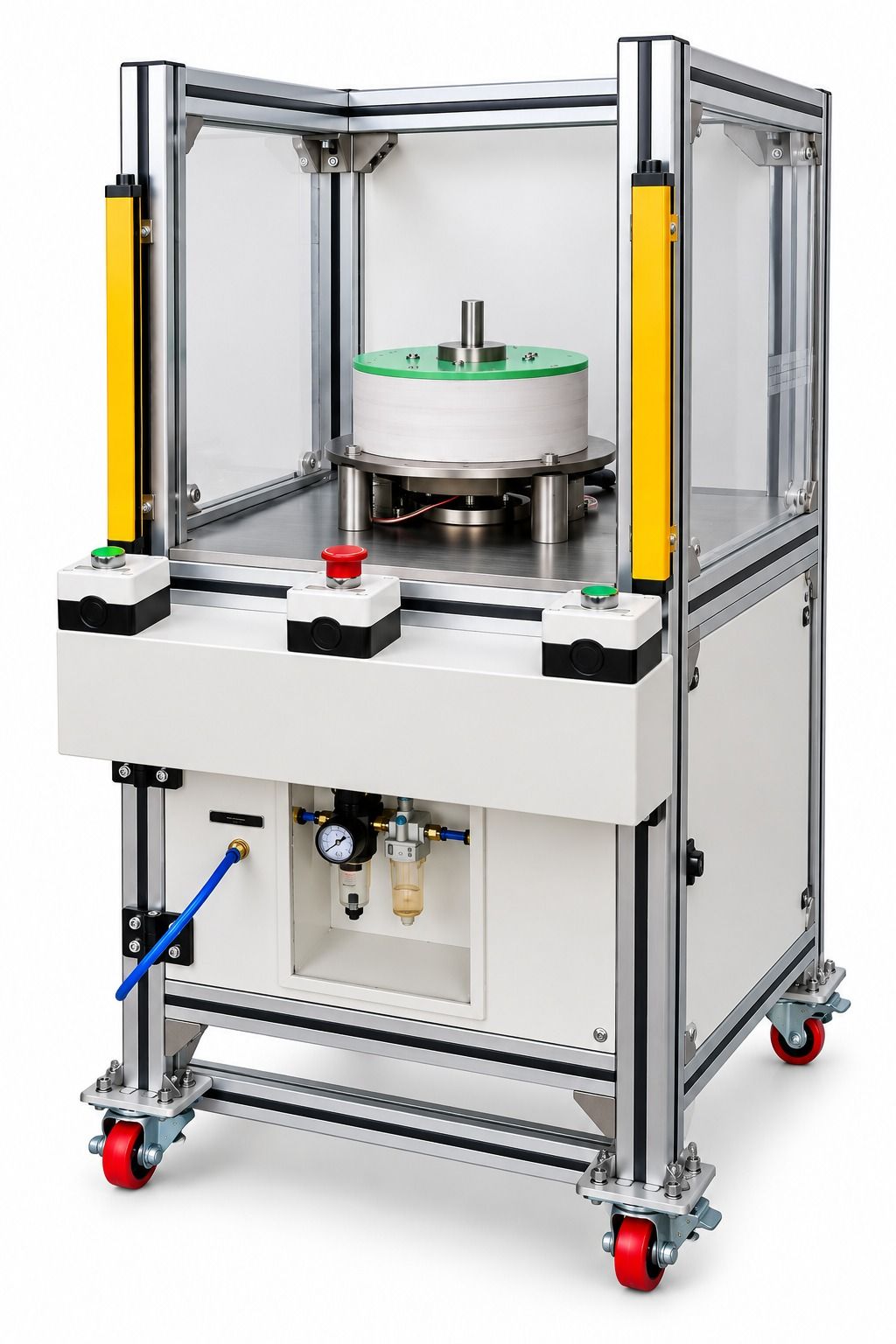
A motor housing magnetizer fixture is shaped to fit inside the housing, with conductors arranged to create the required poles. A capacitive discharge impulse magnetizer fires a pulse of a few milliseconds through it to magnetize the arcs radially from the inside, while the steel housing completes the magnetic path.

Two-pole and four-pole housings

Most small PMDC motors use two poles, and larger designs often use four. The pole count and arc positions are built into the fixture, and the housing is located against a stop or key so that every part sits the same way.

Why magnetize after assembly

Magnetized arcs are hard to fit: they snap to the housing wall, chip on contact and attract steel particles that later cause noise and wear. Fitting unmagnetized arcs and leaving magnetization until the housing is complete avoids this and makes automatic assembly practical.

Getting a consistent result

  • Alignment: the fixture poles must line up with the magnet arcs. An offset pole shifts the motor’s magnetic axis, which can affect commutation and noise.
  • Field strength: ferrite typically needs roughly 1–1.5 T to saturate, and the fixture must deliver this through any clearance between fixture and magnet.
  • Cycle rate: fixture cooling and capacitor recharge time decide how many housings can be magnetized per hour.
  • Checks: peak-current monitoring on every pulse and a gauss reading at each pole help catch missed or weak parts.

See the full magnetizer fixtures and coils range, or read our guide on choosing the right magnetizer for help sizing the machine.

Enquire about housing magnetizers

SK Enterprises manufactures magnetizers and housing fixtures in Maharashtra, India. Send your housing drawing, magnet details and output per shift. Request a quotation for your housing.

Relevant products

Products for motor housing & stator magnetizer

FAQs

Frequently asked questions

How is a motor housing magnetized?

A fixture is inserted into the housing so that its poles line up with the arc magnets. One pulse from the magnetizer magnetizes all the arcs radially, typically creating two or four poles.

Does the steel housing affect magnetization?

Yes. The housing forms the return path for the magnetizer field, so its wall thickness and material affect the fixture design and the energy needed.

Can one fixture handle different housings?

Usually only housings with the same inner diameter, length and pole layout. A different housing generally needs its own fixture, although the same magnetizer can drive both if it has enough energy.

Talk to our engineers about your requirement

Share what you need to magnetize — part, magnet material, pole pattern and output. We will recommend a machine and send a quotation.

WhatsApp Us